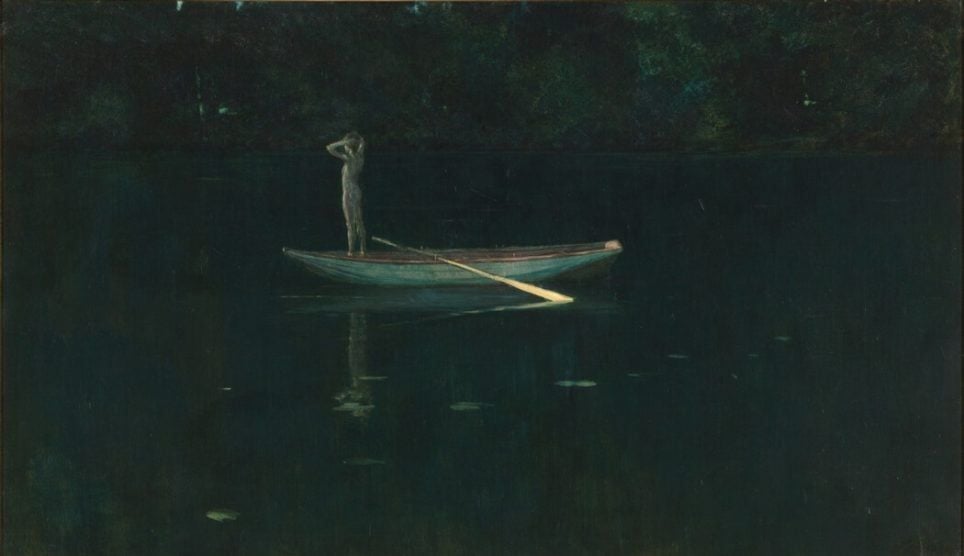
Standing before paintings chosen from the Musée d’Orsay’s collections, a group of teenagers wondered what the people depicted might be feeling. In their comments, they suggested that one figure might be tired or uncomfortable in their own body. Their conversations, recorded during visits to the museum, feature in a video in Échos de l’Invisible, on display from 13 October 2026 to 3 January 2027.
The group included around ten young people aged 13 to 17 who were receiving care from the child and adolescent psychiatry department at Pitié-Salpêtrière Hospital. During the visits, they shared their impressions of the works and the feelings they prompted, connecting them with questions that arose in conversation.
The project began with a proposal from Jad Bestautte, a student selected from 150 applicants to Orsay Lab. Launched by the museum in summer 2025 in partnership with the Institut de l’Engagement, the initiative invited people aged 18 to 25 to imagine projects linking the collections with contemporary concerns. Bestautte chose to focus on young people’s mental health.
Working with the museum’s conservation team, Bestautte selected works for the visits that she thought could stir emotions and encourage conversation. In the display, the video is presented alongside Alexander Harrison’s La Solitude, painted around 1893, Félix Vallotton’s Le Dîner, effet de lampe, from 1899, and Camille Claudel’s sculpture L’Implorante, also from 1899.
For Bestautte, artworks can offer a starting point for connecting with others. The project grew from a wish to create a space for listening in the museum, where the teenagers’ interpretations could find a place beside the works.