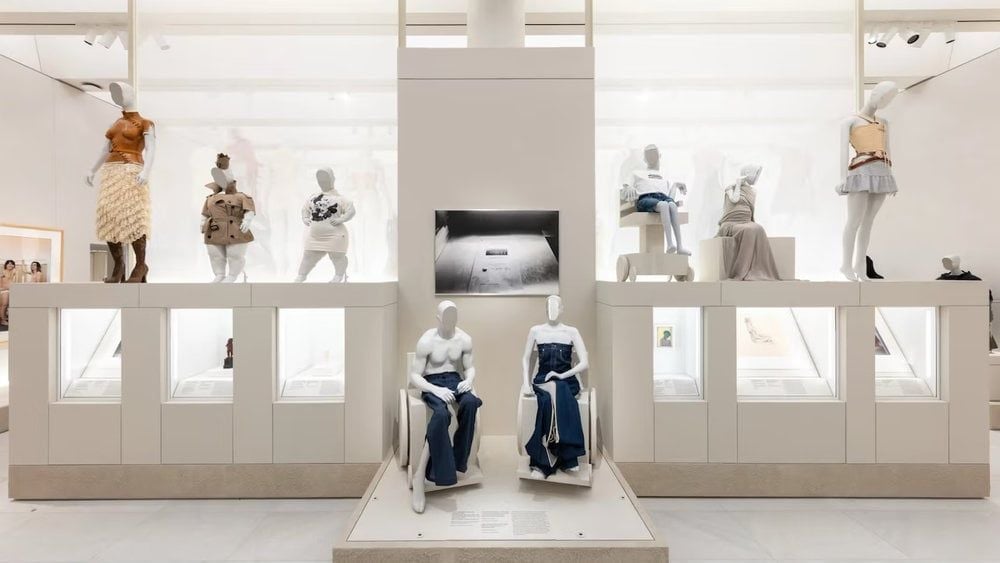
Padding, constriction and asymmetrical structures alter the outline of the body in garments displayed in Costume Art at New York’s Metropolitan Museum of Art. Some mannequins are modelled on specific people, bringing proportions beyond those of the idealised classical body into the galleries.
Curated by Andrew Bolton, head of the Costume Institute, the exhibition brings together nearly 400 objects. Garments and artworks are paired in sections devoted to different ways of understanding the body.
The Classical Body, the Pregnant Body, the Ageing Body and the Mortal Body are among the themes guiding these comparisons. The exhibition focuses chiefly on Western art, from prehistory to the present.
In the section on the corpulent body, pairings of figurines and contemporary garments explore the meanings attached to body size. The Met’s curatorial text describes corpulence as historically both revered and stigmatised, associated with fertility but also subject to moral judgement. Quilted nylon, silicone, stretch knit and moulded plastic are among the materials designers use to reinterpret its forms.
The section on disability connects garments with the experiences of the people who make and wear them. It considers how physical, sensory and cognitive differences inform the design and use of clothing.
Open until 10 January 2027, Costume Art inaugurates the new Condé M. Nast Galleries beside the Great Hall. The mannequins’ heads, designed by artist Samar Hejazi, have polished steel surfaces. According to the Met, they are intended to let visitors see themselves reflected among the bodies and garments on display.