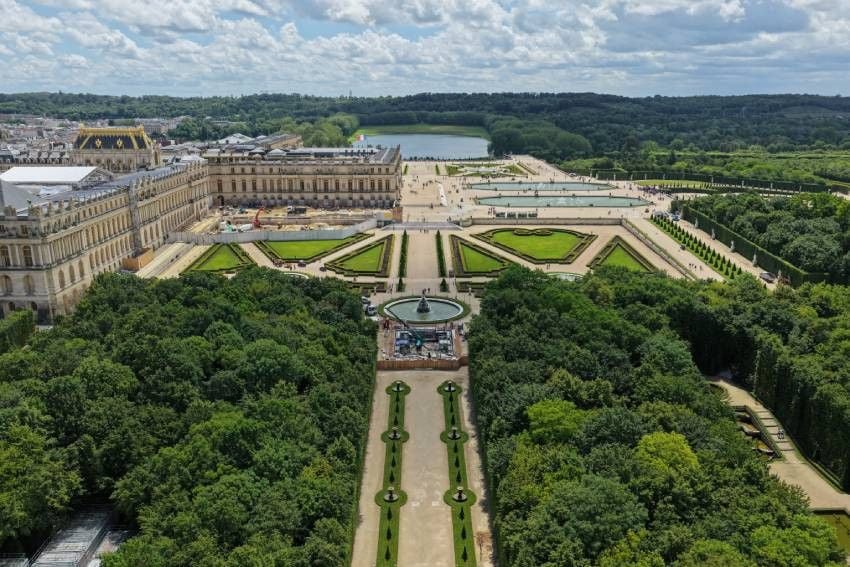
The nymphs carved by François Girardon were meant to appear behind a veil of water. At the Nymphs’ Bath in the gardens of Versailles, the flow partly conceals the figures and helps create the composition’s effect. Recovering that effect means restoring not only the reliefs but also the system that supplies the fountain.
The work also includes the Dragon Fountain, on the same northern axis of the gardens. Both fountains are part of the setting devised under Louis XIV, where mythological subjects and hydraulic engineering contributed to the representation of royal power.
At the Nymphs’ Bath, built between 1668 and 1670, the work will address deteriorating marble, corroded lead panels and leaks in the structure. Removing the decorative elements will also allow work on drainage and waterproofing. The reliefs will be gilded again, restoring a finish documented in the seventeenth and eighteenth centuries but now lost. It will make them stand out against the white surrounds and green marble pillars.
Specialists in the palace fountains are working alongside the sculpture restorers. The Nymphs’ Bath currently receives surplus water from the pools above it. The project aims to restore the operation of its seventeenth-century water system and regulate the supply more precisely, producing an even curtain of water in front of the figures.
At the Dragon Fountain, water instead rises in a jet of around 27 metres, the highest in the gardens of Versailles. The scene retains elements from different periods. Its original decoration, made in 1667 by Gaspard and Balthasar Marsy, was recreated on a larger scale in the late nineteenth century using original fragments. The seventeenth-century basin now holds a nineteenth-century dragon alongside swans and dolphins from the twentieth century.
Here too, the lead sculptures need restoration, as do weakened masonry, eroded stone and cracks in the basin floor. Work on the water system includes rebuilding the central circular pipe. Its regular shape will help distribute water evenly among the sculpted groups.