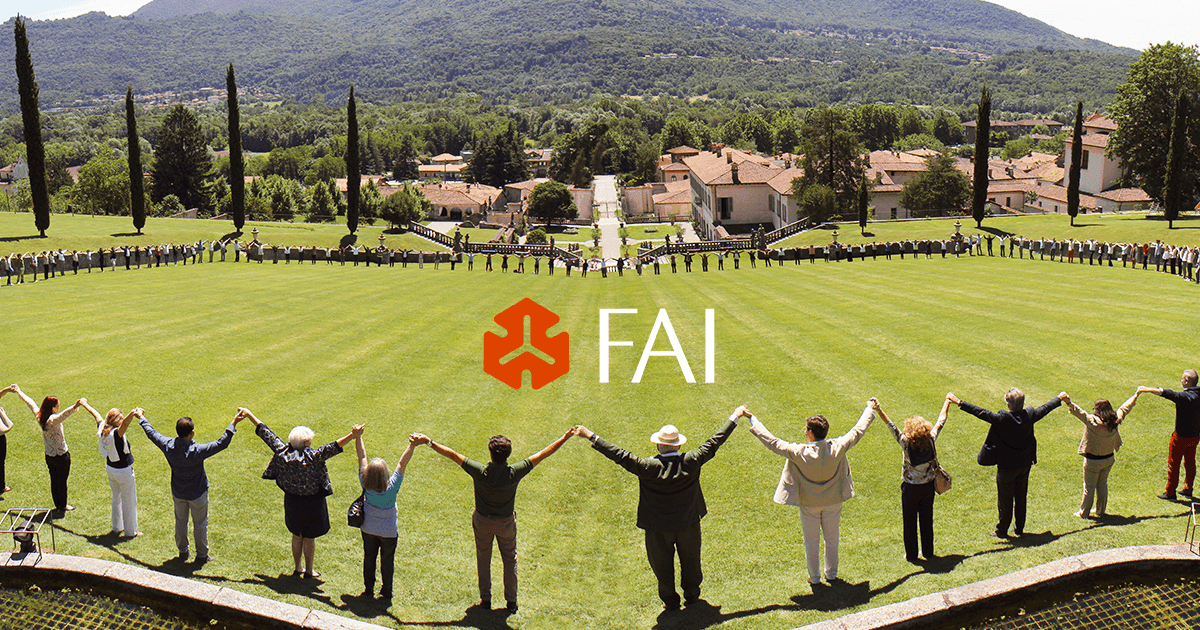
Access to a cultural place does not end at the entrance. People also need the conditions to understand what they encounter, interpret it in their own way and take part in the life around it. This is the starting point for A Porte Aperte, an 18-month national programme coordinated by FAI, the Italian National Trust, with Fondazione Dynamo Camp, Fondazione Mus-e Italia, Fondazione IBVA and Associazione Amici del FAI.
The five organisations are bringing together cultural, social, educational and artistic expertise to involve students, families, volunteers and professionals. The programme pays particular attention to people with disabilities, people with experience of migration and people facing socioeconomic disadvantage, who may encounter different barriers to cultural participation.
Activities will take place at FAI properties and include educational visits, artistic and co-creative workshops, active citizenship initiatives and cultural volunteering. Some sessions will use culture as a way to learn Italian, while others will be designed for younger generations.
The project also focuses on the people who work in cultural places. Volunteers and professionals will be able to develop tools for recognising different needs, removing barriers and designing more attentive forms of welcome. In this approach, accessibility becomes part of everyday practice rather than an additional measure considered after the main decisions have already been made.
Fondazione Dynamo Camp will contribute its experience of Recreational Therapy with children and young people living with serious or chronic health conditions, disabilities or other forms of vulnerability, together with their families. Artistic activities at the Camp and in its City Camps use art as a means of expression, connection and participation.
A Porte Aperte begins with FAI properties, with the aim of developing practices and tools that can also be applied elsewhere. Working across different fields allows the partners to address accessibility from several perspectives and to test approaches that connect heritage, education and social inclusion.
Being able to enter a cultural place is essential, but it is not the whole of access. Participation begins when people have the conditions to experience heritage, contribute to its interpretation and recognise something of their own experience in it.


