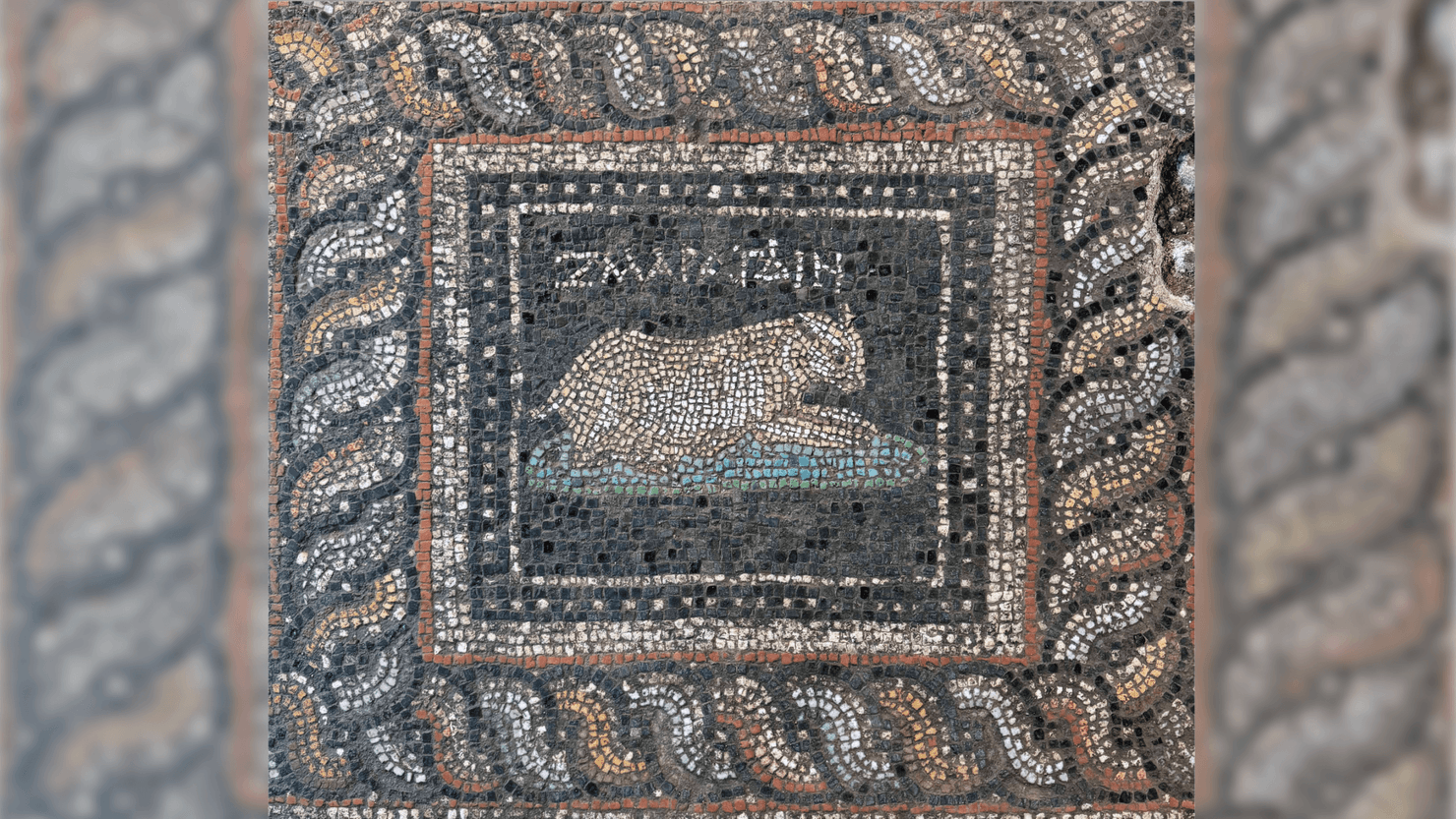
On a floor in southern Turkey, a cat has had a name for around 1,800 years. Excavators at the ancient city of Prusias ad Hypium, near modern Konuralp, have uncovered a Roman era mosaic that labels its animals like characters in a story: a cat called Zmarragdos, meaning Emerald, and a dog called Okeanos, meaning Ocean.
That detail is what makes this floor worth pausing over. Roman mosaics are full of animals, hunting dogs mid chase, lions in combat, birds pecking at fruit, but they are almost always generic, decorative, anonymous. Giving a household pet a proper name, in stone, set into a floor meant to be walked over for generations, is a small act of devotion that survives the person who felt it.
Archaeologists from Duzce University, working with Turkey's Ministry of Culture and Tourism, found the mosaic during excavations reported by Live Science. Prusias ad Hypium was a prosperous city in Roman Bithynia, and the mosaic likely floored a wealthy home, the kind of house where a family could afford a labelled portrait of their cat rather than just a warning to trespassers.
That contrast is worth sitting with: this same visual language, mosaic floors with animals and inscriptions, was also used across the Roman world for 'cave canem', beware of the dog, stark warnings meant to intimidate strangers at the threshold. Here, the same medium does something gentler. Emerald and Ocean were not guarding the door. They were being remembered.
Excavations at the site are ongoing, and researchers have not yet said whether more inscriptions, or more animals, might turn up elsewhere in the same house. But for now, two pets outlived their owners by a millennium and a half, their names intact, their portraits underfoot, in a language most of the people who will ever walk near that floor will not read.
Someone in Prusias ad Hypium loved a cat named Emerald enough to spell it out in stone. Whatever else is lost about that household, that much got through.


