A banana wrapped in foil, coins placed inside a bar of soap, cutlery pushed into a kitchen roll to dry. These are actions Antonella Napoli carried out in everyday life, and they became the starting point for Mamma Mia Museum, a photographic project conceived and curated by her daughter, Serena Becagli.
Becagli, a curator born in Florence in 1973, began sharing the images on social media in 2020, when her mother started to show the first symptoms of dementia. At that time, Antonella accompanied her to meetings, site visits, openings and museum trips. The need to combine professional work with care changed the way they spent time together, as well as their relationship with art spaces.
Becagli began photographing some of the arrangements and displacements of objects made by her mother. She then gave the images titles and captions, recognising echoes of contemporary artworks and artistic gestures in those situations. In 2024, the material became a first exhibition of 21 photographs.
It is important to distinguish Antonella’s actions from their transformation into artworks. The photographs cannot tell us what meaning she attached to those gestures. They document the way Serena observed and selected them, and the new context in which she placed them. This distinction does not diminish Antonella’s presence. It makes it possible to recognise that presence without attributing artistic intentions that cannot be known.
Some of the references are explicit. In Ho incartato la banana di Cattelan, a banana wrapped in foil enters into a relationship with Maurizio Cattelan’s work. An attempt to cut grains of sugar with scissors, meanwhile, recalls the impossible actions of Gino De Dominicis. The language of art gives Serena a way to look at these moments and return them to others without reducing them solely to expressions of illness.
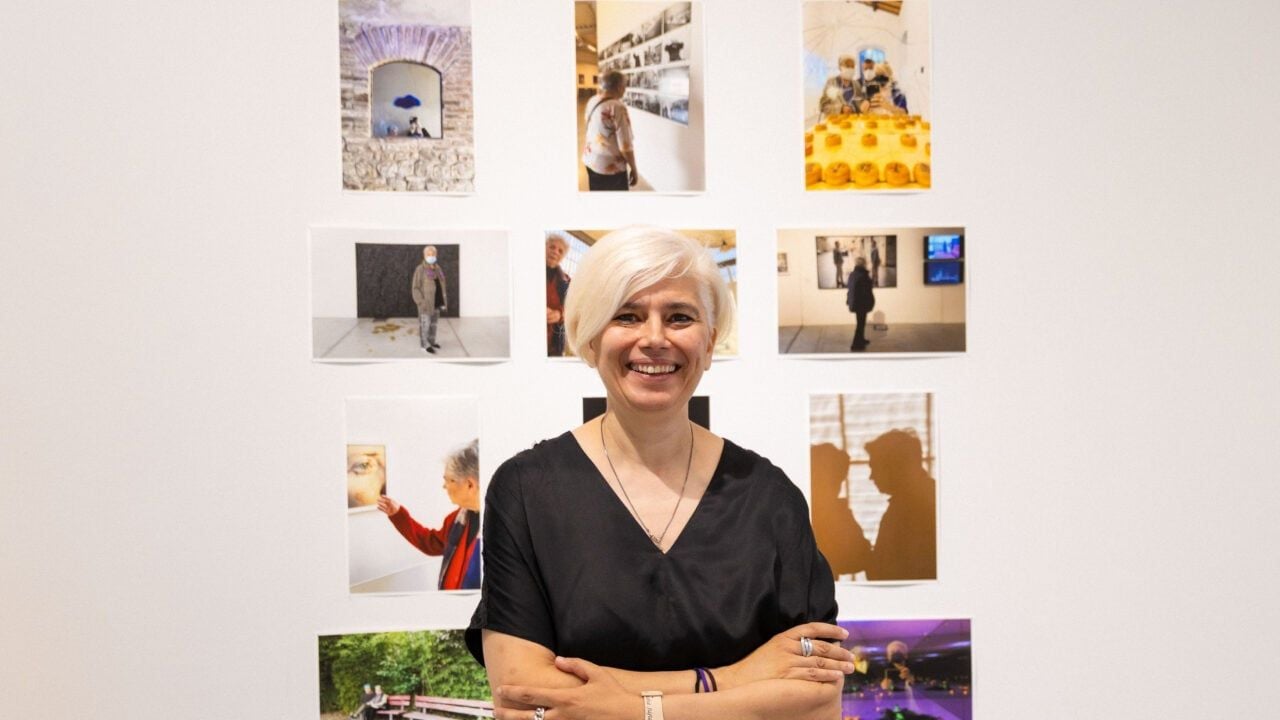
The Centro per l’arte contemporanea Luigi Pecci in Prato is now presenting the project in the exhibition La rivoluzione siamo noi, open until 1 November 2026. The exhibition includes 25 photographs, four of them previously unseen, together with video fragments and images of visits Serena and Antonella made to museums and galleries. Its title refers to Joseph Beuys’s work, visible behind Antonella in one of the photographs.
As her mother’s dementia progressed and moving around became more difficult, Serena had to reduce some activities and rethink how she spent her time. Developing the project allowed her to maintain a relationship with the art world while giving a shareable form to the changes entering their lives.
Here, art is not presented as a treatment or an escape. It becomes a way of paying attention, creating relationships and naming experiences that often remain confined to private life. This remains the specific story of Antonella Napoli and Serena Becagli, a mother and daughter whose relationship changes as an artistic gaze tries to accompany its transformations.


