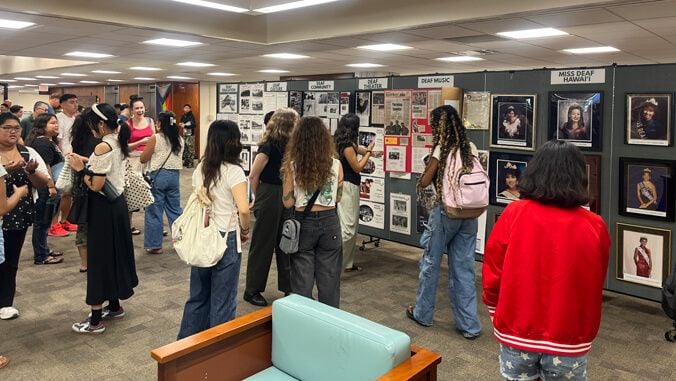
On 14 September 2026, the lobby of Hamilton Library at the University of Hawaiʻi at Mānoa became the home of a new Deaf History Museum. ‘I ʻike ʻia, I lohe ʻia: Nā Moʻolelo o ke Kaiāulu Kuli o Hawaiʻi’, translated as ‘To Be Seen, To Be Heard: The Stories of Hawaiʻi’s Deaf Community’, brings together artefacts, stories and contributions from Hawaiʻi’s Deaf and hard-of-hearing community.
The University of Hawaiʻi describes the exhibition as a record of more than a century of Deaf history, culture and community in Hawaiʻi. Ed Chevy, a Deaf historian and the museum’s curator, said: ‘Deaf history is Hawaiʻi history.’ The exhibition opened in recognition of Hawaiian History Month and Deaf Awareness Month, and aims to make these stories more visible and accessible to a broader audience.
The opening ceremony took place separately at Kennedy Theatre. It included sign-language musical performances and a keynote by Yvette I. Ibarra-Keohuloa, a Deaf descendant of Hawaiian high-ranking chiefs Kameʻeiamoku and Kamanawa, trusted advisors to King Kamehameha I. She shared her genealogy, stories and perspectives. The celebration also marked the first Deaf show presented on Kennedy Theatre’s main stage.
The university also reports growing interest in American Sign Language and Deaf culture. Enrolment in ASL courses rose from 19 students in spring 2019 to 265 in autumn 2025, an increase of 1,400 per cent. Demand exceeds capacity, with long waiting lists for courses. A 2024 survey found that 94 per cent of ASL students were interested in pursuing a bachelor’s degree in ASL-English interpreting. This autumn, UH Mānoa launched a standalone Bachelor of Arts in Linguistics with a concentration in ASL.
Gisella Tomita, one of three Deaf instructors of ASL at UH Mānoa, came up with the idea of bringing the museum to Hamilton Library. Its location places the university’s study of language alongside the history, culture and community that give it meaning.


