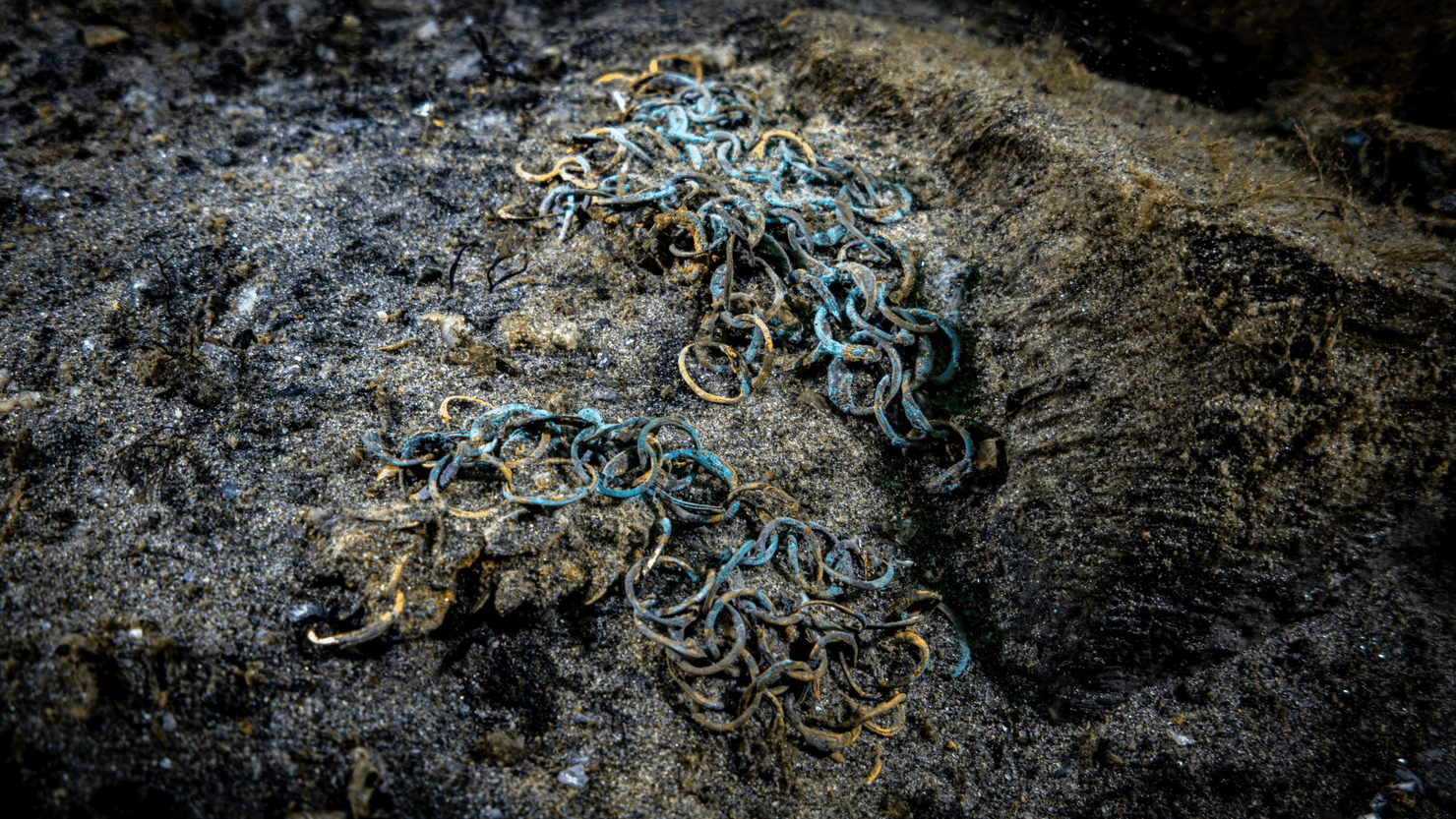
The archaeologists were documenting a chest containing ammunition-making tools when they spotted fragments of copper-alloy chain mail nearby. As archaeologist Rolf Fabricius Warming told Live Science, the fragments lay fully exposed on the seabed. They were beneath the forecastle, a raised fighting platform at the bow of the ship.
Gribshunden was the flagship of King Hans of Denmark. It sank in 1495 while anchored north of the island of Stora Ekö, off the Swedish coast. Archaeologists began documenting the chest in 2023. Inside, they identified lead and moulds for casting shot of different calibres.
Rodrigo Pacheco-Ruiz, an archaeologist at the University of Southampton, suggests that the space beneath the forecastle may have been used to store military equipment, possibly including gear used by the German mercenaries that historical sources place aboard the ship. The precise function of the space and the ownership of the objects remain open questions.
Warming cautions against inferring the owner’s rank from the quality of the workmanship alone. Armour of this kind could remain in use for years and be repaired along the way. The fragments may therefore come from older equipment that was still in use in 1495.
For Warming, the chest found near the chain mail fragments raises a question about how the troops on board were supplied. Did the mercenaries bring their own ammunition and the tools to make it, or did the royal fleet supply them?