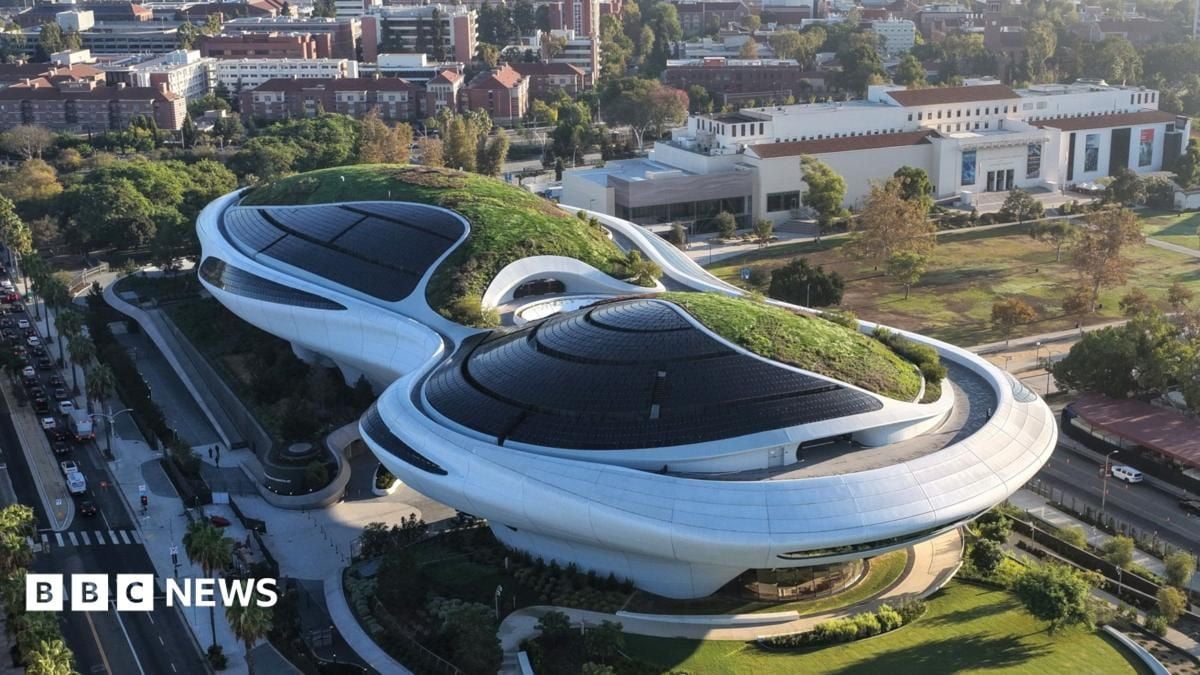
A Norman Rockwell hangs near a Star Wars costume. That single pairing, inside a $1bn building shaped like nothing else on the Los Angeles skyline, is the argument George Lucas has been building for decades: that pictures made to tell stories, whether painted for a magazine cover or built for a spaceship battle, deserve to be taken as seriously as anything in the world's great galleries.
The Lucas Museum of Narrative Art opens later this month in Exposition Park, and the BBC's Regan Morris was given a preview of what is inside. The collection runs to more than 1,200 works, and while Star Wars memorabilia is there, as anyone would expect from the man who created the saga, it shares space with illustration, comic art, and paintings spanning more than a century. The point is not nostalgia for a galaxy far away. It is a thesis, laid out room by room: that narrative art, the kind long dismissed as commercial or populist, sits on equal footing with what museums have traditionally called fine art.
Lucas and his wife, Mellody Hobson, have spent over twenty years assembling the collection and even longer arguing for its legitimacy. The museum itself became part of the story: after a public tussle over sites in Chicago and San Francisco, Los Angeles won the building, a swooping structure that has already become a landmark before a single visitor has walked through its doors.
What makes this more than a vanity project is the wager underneath it. Lucas is not just donating art, he is trying to settle an old argument about who gets to decide what counts as culture worth preserving. A comic book panel, a movie prop, a pulp-magazine illustration: all now framed, lit, and hung with the same reverence usually reserved for oil on canvas centuries old.
Whether the art world agrees is the question the museum quietly poses to everyone who walks through it. Los Angeles, a city built on the business of telling stories, may turn out to be exactly the place willing to say yes.


