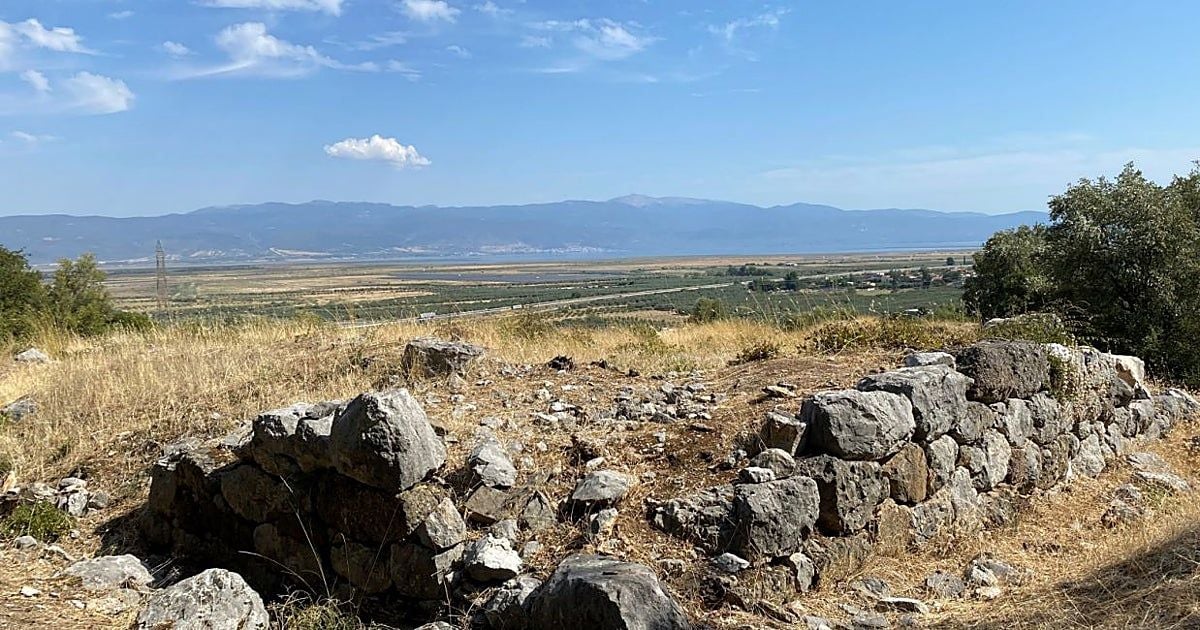
At Thermopylae, the surviving remains of the Phocian Wall stand mostly close to ground level and are difficult to distinguish. Greece’s Ministry of Culture has announced plans to consolidate and restore the structure, protecting masonry damaged by weathering and earthquakes while making its form easier to understand.
According to the Ministry’s historical account, the Phocians built the fortification in the sixth century BC to repel incursions by the Thessalians. During the Persian invasion of 480 BC, the Spartans and their allies repaired the wall and used it to defend the pass.
The landscape today is very different from the terrain on which the battle was fought. In antiquity, the route ran through narrow gaps between the hills and the sea. Over the centuries, river sedimentation and changes in sea level have transformed the coastline. The sea now lies several kilometres from the mountain slopes, so the present-day plain alone offers little sense of the ancient passage.
During the project’s first phase, excavation and vegetation clearance exposed the outline of the fortification. Fallen stones were sorted and documented in preparation for restoration. The planned work will use the available original building material, returning it to its original position or placing it in other documented locations to improve the masonry’s stability and make its arrangement clearer.
Conservation of the wall forms part of a wider plan for visiting Thermopylae. The proposed routes will connect the fortification, the battlefield and Kolonos Hill, associated with the final phase of the fighting, with the modern Leonidas monument and the Historical Information Centre. Rest areas, viewpoints and information points are also planned to help visitors understand how these places relate to one another.