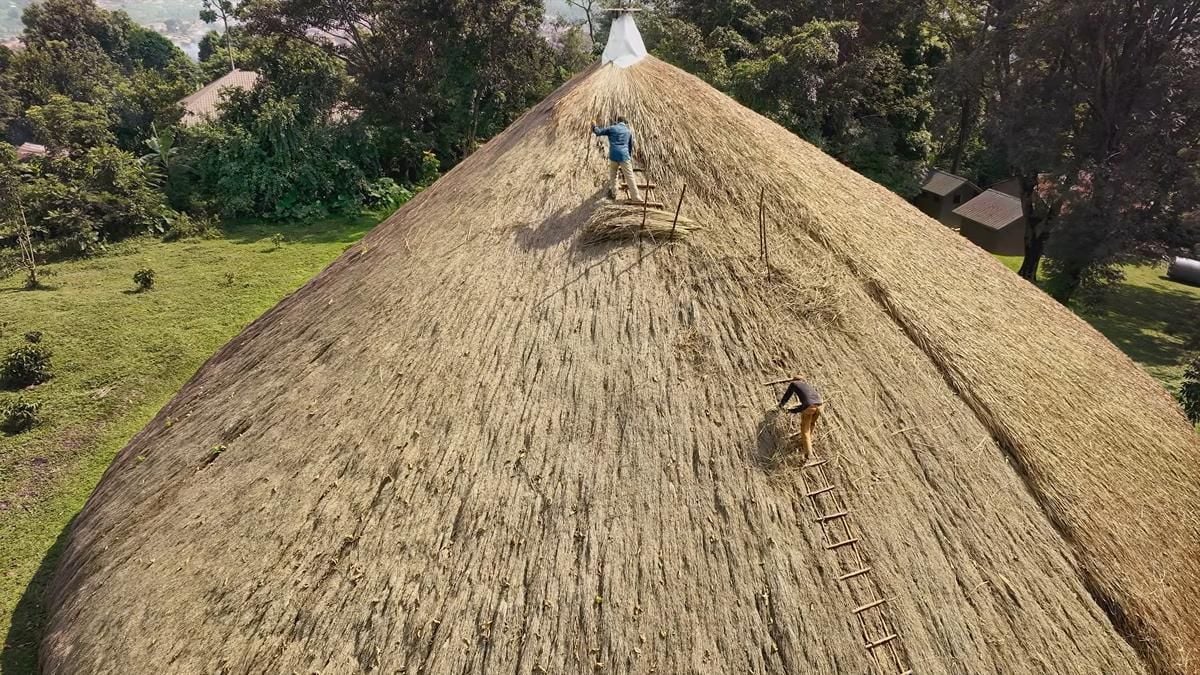
Wooden poles, reeds and grasses form the royal tombs at Kasubi, on a hill in Kampala. These materials need maintenance and replacement over time, so conserving the site also depends on passing building skills from one generation to the next. A documentary by Sosena Solomon, produced by the Metropolitan Museum of Art with the World Monuments Fund for the series Africa’s Cultural Landmarks, tells this story through the places and the people who care for them.
Kasubi’s main building was built in 1882 as the palace of King Muteesa I and became a burial place in 1884. It holds his tomb and those of three successors. For the Baganda, it remains a spiritual centre where the king and his representatives perform rituals connected to Buganda culture. Conserving Kasubi therefore also means caring for a place of living religious practice.
A fire destroyed the main burial building in March 2010. Reconstruction was completed in summer 2023, and UNESCO removed the site from the List of World Heritage in Danger on 12 September that year. Work on the buildings was accompanied by a fire protection system and training for community volunteers to help prevent further fires.
The film also visits the Wamala tombs, formerly the palace and burial place of Suuna II, Muteesa I’s father. An earlier restoration there, together with archival records, provided references for the reconstruction of Kasubi.
Reconstruction has not removed every difficulty involved in caring for the site. The Met notes that urbanisation is making the reeds and grasses needed for the buildings harder to obtain. Skills must be sustained alongside supplies: UNESCO has recognised the work of communities teaching traditional techniques to younger generations. That knowledge makes it possible to repair the roofs and renew elements as they deteriorate.