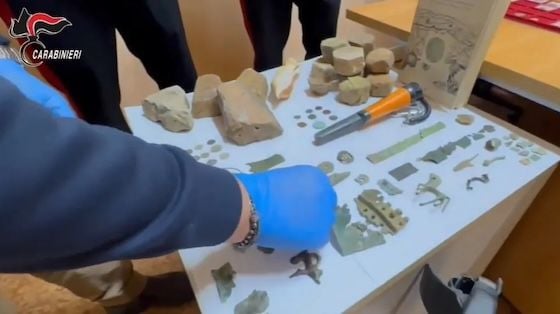
Four hundred mosaic tesserae thought to come from a Roman-era floor are among the artefacts recovered in Operation Eridanos, an investigation into suspected unauthorised excavations and the illicit sale of archaeological finds in northern Italy.
The Carabinieri also recovered 311 ancient coins, a bronze sculpture identified as a depiction of Jupiter, 489 metal and terracotta artefacts, and 30 worked flints. Equipment seized included five metal detectors, three pinpointers, which help locate metal objects precisely, and digging tools.
The investigation began in March 2026 after unusual activity was detected on an online sales platform. It is being coordinated by the Verona public prosecutor’s office and conducted by the Carabinieri unit for the protection of cultural heritage in Rome.
Investigators say the user posted vague listings to conceal transactions and anonymously shipped batches of recently excavated coins to buyers in Italy and abroad. A search of the user’s home on 15 June 2026 led to the seizure of archaeological artefacts and digging equipment.
Subsequent inquiries identified a suspected network of people involved in excavating, acting as intermediaries and handling stolen goods. Eight search warrants were executed in connection with eight people under investigation, on various grounds, for theft and handling of cultural property and for unauthorised archaeological searches.
According to investigators, the digging was concentrated around Verona and Mantua and along the Canal Bianco in the Rovigo area. Those involved allegedly consulted specialist historical books and cross-checked GPS coordinates to locate ancient sites not yet subject to heritage restrictions. The searches took place at night, using metal detectors and digging equipment, with the help of local contacts.
Investigators also believe a business in the Mantua area may have helped assess, store and sell the artefacts while concealing their alleged illicit origin.
Recovering the objects does not necessarily recover all the information about where they were found. When an artefact is removed without recording its position and its relationship to other features of a site, evidence needed to understand its use and history may be lost.