The masegni, the trachyte stones that pave St Mark’s Square, were lifted, examined and numbered before being restored and relaid in their original order. As work proceeded, earlier layers of paving came to light. They were documented through archaeological investigations agreed with the Soprintendenza, Italy’s heritage authority.
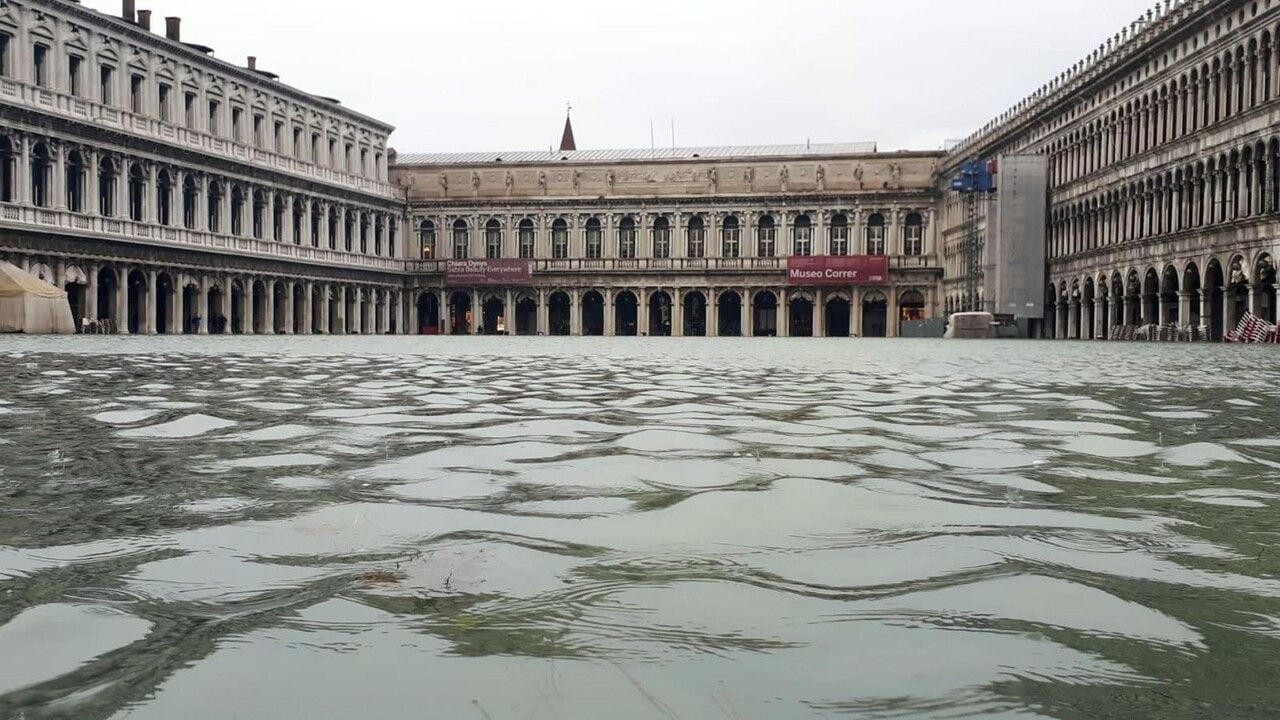
The restoration was needed after the exceptional tides of late 2019. Wave action had washed away some of the sand beneath the masegni, causing subsidence, instability and cracks. The work covered almost 5,000 square metres across the square and the Piazzetta San Marco, and included strengthening and repairing the ground beneath the paving.
The last restored masegno was laid on 27 March 2026. Venice City Council and the companies involved subsequently signed the final inspection certificate, confirming that the work had been carried out as required and marking its technical completion.
A burial containing the remains of at least four people had also been reported near the Procuratie Vecchie. Other archaeological evidence found in the same area may, according to preliminary assessments relayed by Venice City Council, be connected to the former church of San Geminiano. That possible connection concerns the other evidence, not the burial itself.
The final inspection closes the work on the paving visible today. Stabilising it has also produced new documentation of the older layers on which St Mark’s Square took shape over time.


