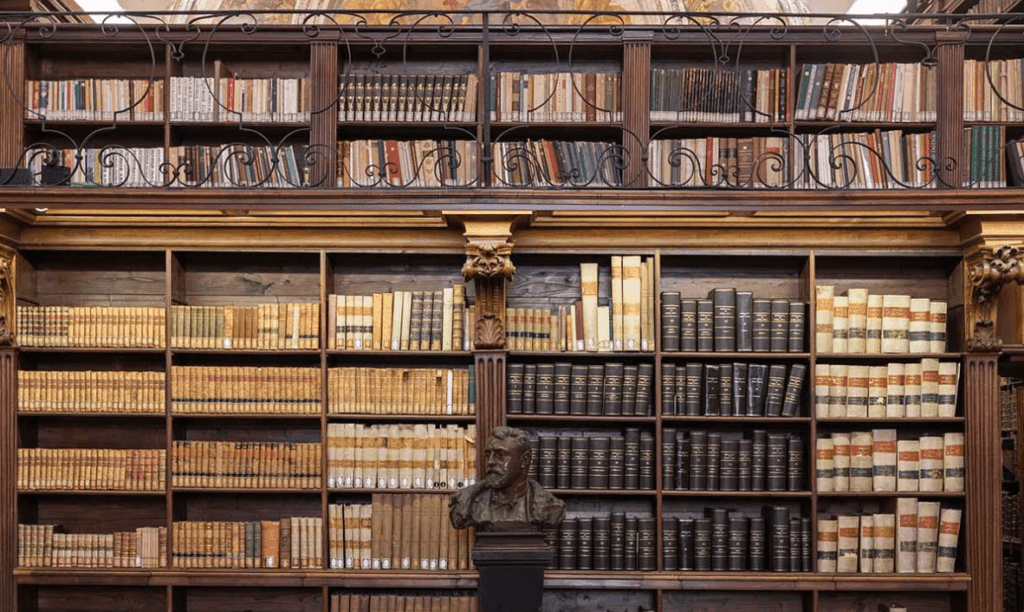
On 7 September 2026, the reading rooms of the Biblioteca Nazionale di Archeologia e Storia dell'Arte, tucked inside Rome's Palazzo Venezia since 1922, went dark. Not for renovation, not for a holiday closure: for good. After 104 years, Italy's only free national library dedicated entirely to archaeology and art history is packing up 380,000 items, monographs, periodicals, manuscripts, photographs, maps, technical drawings, spanning from antiquity to the present, and moving across the city.
The destination is Palazzo San Felice, a historic building facing the Quirinale that has never once been open to the public, aside from a handful of construction-site tours in late 2025. Swiss architect Mario Botta has been reworking it since 2023, and the plan, backed by President Sergio Mattarella's 2017 authorisation, hands the Ministry of Culture a 25-year concession to run the new library there. The numbers promise an upgrade: almost 7,000 square metres, double the space at Palazzo Venezia, with 10,500 linear metres of open shelving for over 400,000 volumes, a 350-seat auditorium, a public square, a café, a bookshop.
But the works are not due to finish before June 2027, and nobody, not the library, not the Agenzia del Demanio managing the handover, has published a firm date for reopening. In the meantime, researchers are left with a reduced remote reproduction service and a satellite reading room at the Sala della Crociera in the Palazzo del Collegio Romano.
The Associazione Ranuccio Bianchi Bandinelli has called the closure something closer to an ending than a relocation: 'A place of memory, when it closes, does not simply move: it inevitably loses something of itself.' Their concern is not sentimental alone. Some of the library's specialist collections, including the archive of archaeologist Rodolfo Lanciani, may not fit into the new premises at all, and no one has yet said which parts of the catalogue might be left behind.
For now, the wooden floor-to-ceiling shelving and the mezzanine walkways of Palazzo Venezia, where generations of scholars once pulled volumes straight from open stacks, sit empty. Whether Rome gains a genuinely more public library, or simply loses a room that took a century to fill, will not be clear for years.


