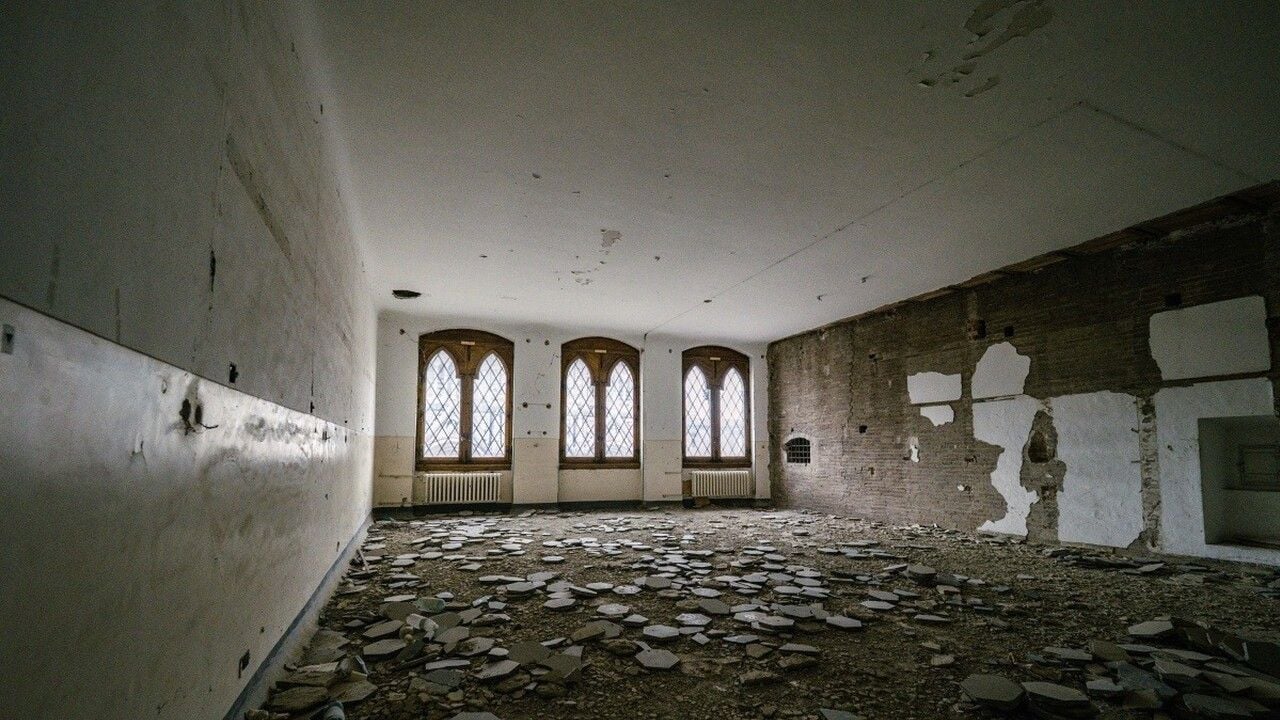
For thirty-five years, most of Santa Maria della Scala has sat in the dark. Siena's great medieval hospital, one of Europe's oldest, treated the sick and sheltered pilgrims for the better part of a millennium before finally closing its wards in 1990. Since then it has become a museum, but only a fraction of the complex, roughly a fifth, has ever been shown to the public. The rest, some 18,000 square metres of corridors, wards and storerooms, has simply stayed shut.
From 10 September, that changes, at least for a season. A new project called 'A porte chiuse. Dentro il Santa Maria della Scala' (Behind Closed Doors: Inside Santa Maria della Scala) will let residents, pilgrims, scholars and visitors walk through spaces that have never been part of the ordinary tour. The visits run every Tuesday and Thursday through September and October, booking only, and they are a preview of something bigger: these are the very rooms due to become the site of a major restoration.
What makes this worth queuing for is not polish but the opposite. According to Siena's mayor Nicoletta Fabio, these unrestored spaces still carry the physical traces of the hospital's original life: centuries of care, labour, faith and daily routine layered into the walls before anything was cleaned up for display. Cristiano Leone, president of the Fondazione Antico Ospedale Santa Maria della Scala, frames it plainly: this is the first time anyone gets to see, concretely, the 18,000 square metres still waiting to be recovered, and why the foundation has staked its future plans on them.
The visits are, in effect, a last look at the building before it becomes a building site. A wider masterplan is already taking shape, one that will eventually turn these dormant wings into new public spaces. But for two months, before the scaffolding goes up, Siena is handing out a rare thing: the chance to see a monument not as it will be restored, but as it actually is, dust and history included.


