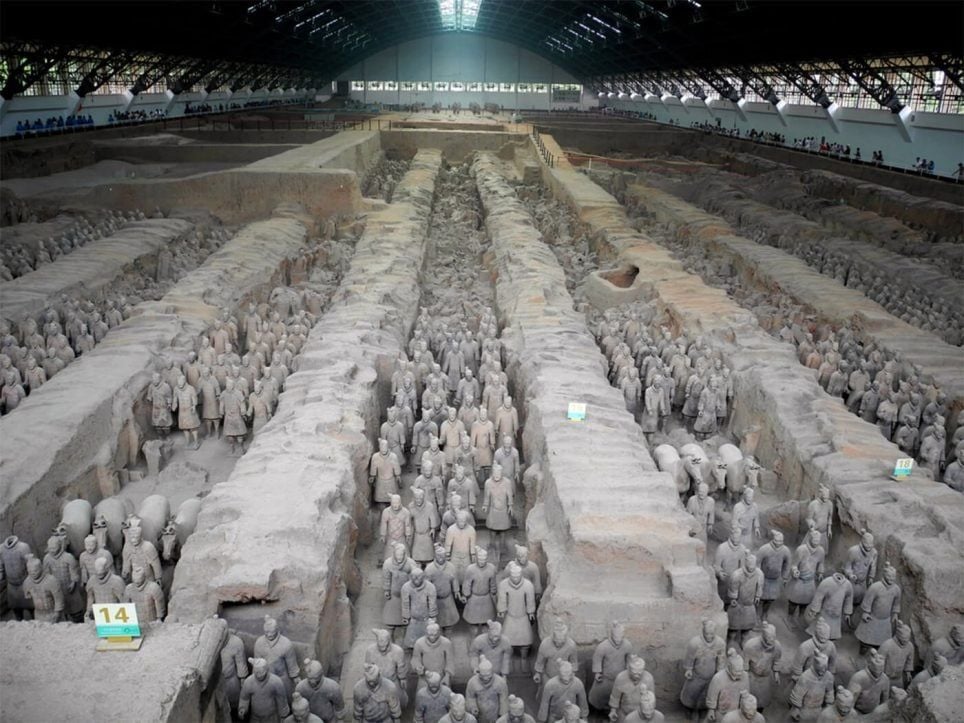
Fingerprints remain on the heads, arms and armour of the terracotta warriors. They were left as people shaped, assembled and decorated the clay figures. Now those marks offer a way to investigate an open question: who took part in making them?
A study published in the Journal of Cultural Heritage examined 79 fingerprints on 36 warriors from the burial complex of Emperor Qin Shi Huang in China. Its findings suggest that women and children may have worked on the figures alongside adult men.
The clues lie in the width of the fingerprint ridges, the small raised lines on the skin. Ridge width changes as a person grows and, among adults, differs statistically between men and women. Using a statistical model, the researchers estimated that about 45 per cent of the prints were left by adult men, 33 per cent by adult women and 22 per cent by people under 15.
Those percentages do not describe the make-up of the workforce: one person could have left several prints. All the figures examined also come from a single area of Pit 1, the excavation unit known as T23. The estimates need further caution because they rely on a comparison with a contemporary European population, and ridge widths for adult women and adolescents can overlap. These limits make individual prints difficult to attribute and could lead to an overestimate of the involvement of women and young people.
Historical evidence also records women and children taking part in craft production. The study points to inscriptions on lacquer objects from the Qin period that mention adult women, girls and boys working under state supervision. They do not establish that these people made the warriors, but they do document their presence in other workshops of the time.