Somewhere on the West Coast of America, a family kept a small sheet of paper for generations without knowing what it was. No provenance file, no gallery label, just something inherited from a grandmother and tucked away. Then someone in the family did what thousands of people do every year: they photographed it and uploaded the image to Christie's free online tool, Request an Auction Estimate.
What came back was not a modest valuation. It was the discovery of the only preparatory drawing by Michelangelo Buonarroti for the Sistine Chapel ceiling ever to reach the open market.
On Thursday 6 February, Christie's sold the sheet in New York for 27.2 million dollars, around 23 million euros, against a pre-sale estimate of just 1.5 to 2 million. It is now the most expensive drawing on paper by Michelangelo ever sold at auction. Andrew Fletcher, global head of Christie's Old Masters department, called it 'one of the most memorable moments of my career', and it is easy to see why: this is the kind of find specialists wait entire careers for.
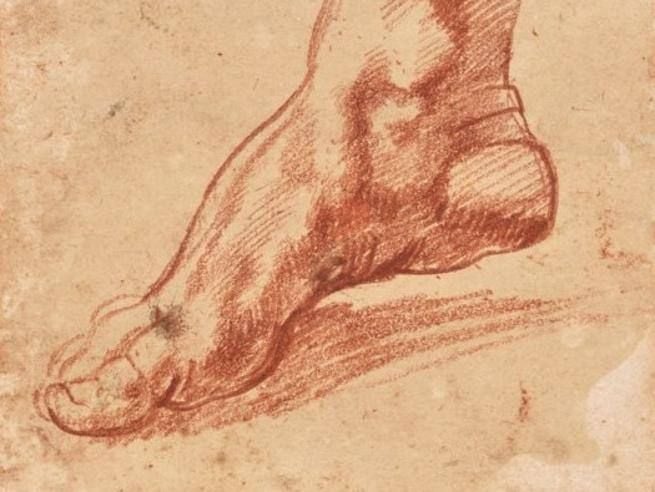
The drawing itself is tiny, just 11.5 by 13.5 centimetres, rendered in red chalk on rough paper and signed in brown ink 'Michel Angelo Buona Roti'. It is a study for the foot of the Libyan Sibyl, one of the most physically complex figures on the Sistine ceiling: her body caught mid-twist, rising and turning at once, right foot on point to bear the weight as she lifts, or perhaps sets down, the book of prophecies. Michelangelo likely drew it around 1511, during the second phase of his four years' labour on the ceiling for Pope Julius II.
Giada Damen, Christie's Old Master drawings specialist, recognised something exceptional in the photograph and, with the owner's permission, had the sheet brought to New York for analysis. Infrared reflectography revealed sketches on the reverse invisible to the naked eye. Stylistic comparison with a related Sibyl study held at the Metropolitan Museum confirmed the same hand, and documented ownership traced the sheet to a European family since the eighteenth century.
About 600 drawings by Michelangelo survive. Only fifty or so relate to the Sistine ceiling, and barely ten of those remain in private hands, most of the rest having been lost during the years he worked on the commission. This is why a single foot, sketched on scrap paper five centuries ago and left forgotten in a drawer until an heir reached for a smartphone, could still upend a saleroom.


