The nets were meant for fish. Instead, they came up heavy with the cargo of a ship that sank two thousand years ago.
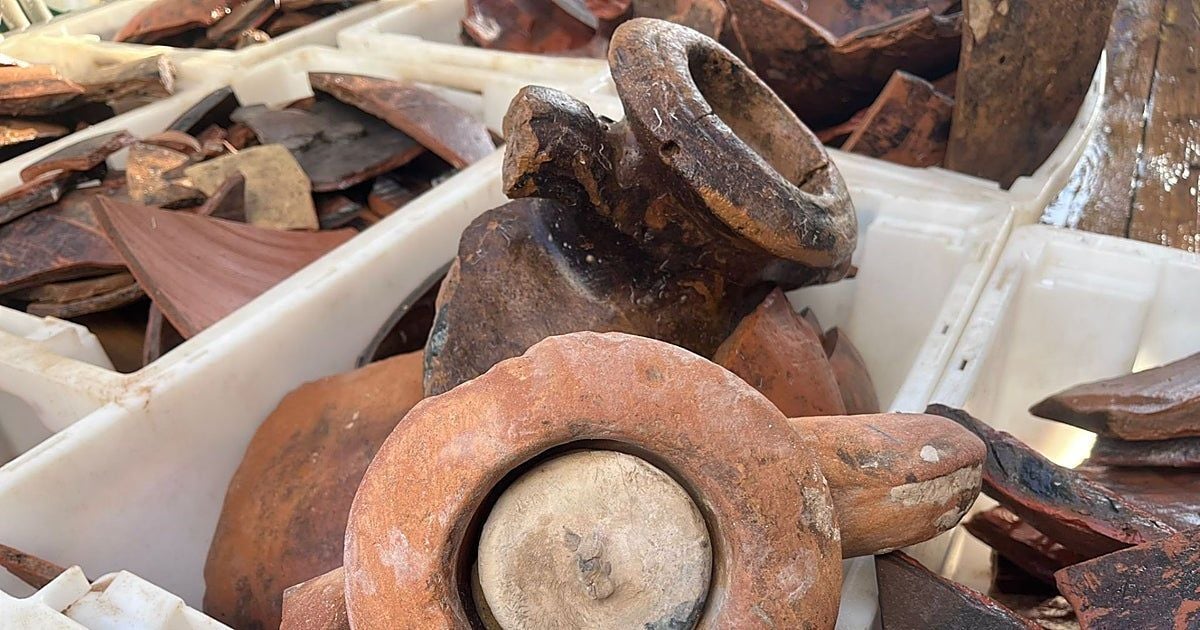
Last Friday, the oceanographic vessel Miguel Oliver was trawling the seabed south of Formentera as part of MEDITS, an international programme that monitors fish stocks and marine ecosystems across the Mediterranean, coordinated by Spain's Institute of Oceanography (IEO-CSIC) and the Ministry of Agriculture, Fisheries and Food. At 1,400 metres, far beyond the reach of any diver, the trawl net snagged something that was not fish at all: 26 Roman amphorae and 17 crates of fragmented ceramic material, hauled to the surface by researchers who had been counting sole and hake.
The find has already made its way to the Archaeological Museum of Ibiza and Formentera (MAEF), where the amphorae now sit in storage, waiting to be catalogued, dated and understood. Nobody was looking for them. Nobody knew they were there. A depth of 1,400 metres puts the wreck site well outside the range of scuba archaeology and even most remotely operated vehicles used for casual survey work, which is precisely why it had gone untouched for so long: it took a fisheries science boat, not an archaeological expedition, to disturb it.
That is the quiet joke buried in this story, reported by ABC.es's Mónica Arrizabalaga. The Mediterranean seabed is thought to hold thousands of ancient wrecks, most of them never mapped, because the ships that could find them are usually looking for something else entirely: fish populations, water temperature, the health of an ecosystem that has nothing to do with Rome. Formentera's waters, sitting on old trade routes between Iberia, North Africa and Italy, are a known hotspot for amphora scatter, but a haul this size, from this depth, by pure chance, is unusual even by the standards of a sea famously generous with its ruins.
The amphorae will now go through the slow, unglamorous work of study: typology, origin, the wine or oil or fish sauce they once carried, the route the ship was following when it went down. What is certain already is smaller and stranger: somewhere under 1,400 metres of Mediterranean water, a cargo waited two thousand years for a boat that was not even looking for it.


