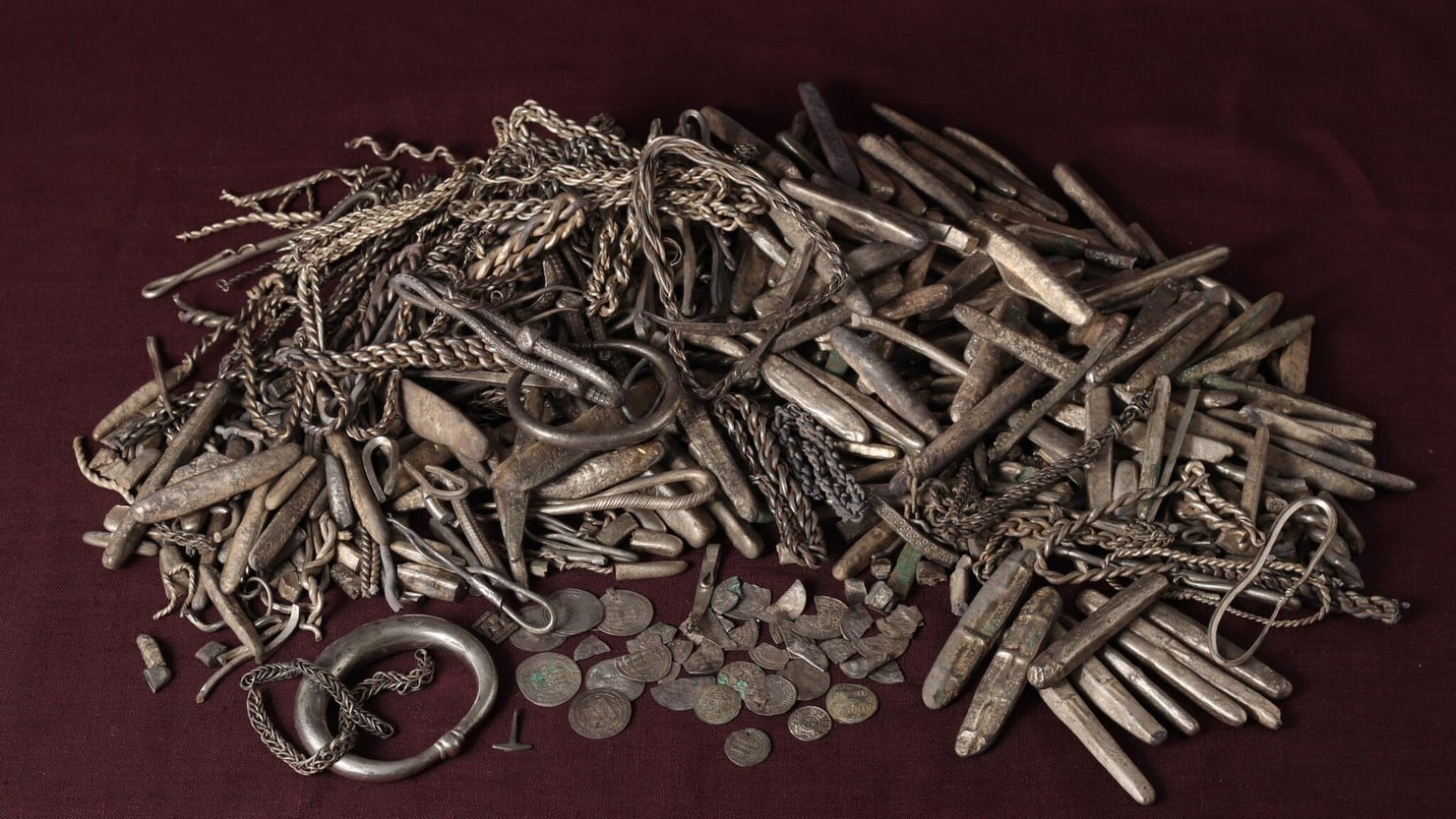
Somewhere in Denmark, a homeowner picked up a shovel to build a terrace and hit a thousand years of history instead. What came out of the ground was more than 40 pounds, about 18.5 kilograms, of silver: the largest Viking Age hoard ever found in the country.
The cache holds roughly 700 objects. Silver bars, jewellery, 47 whole coins and coin fragments, and a small Thor's hammer, the kind of pendant Vikings wore as protection and as a quiet declaration of faith in Odin, Thor and the rest of the Norse pantheon. About 320 pieces had been packed into a clay vessel and buried together; the rest were scattered in the surrounding soil, as if the owner had run out of room, or out of time.
Researchers who analysed the find say it dwarfs anything found before: nearly three times the size of Denmark's previous record holder for a Viking Age silver hoard, according to a translated statement on the discovery.
What makes a hoard like this is not just the metal. It is the question nobody can answer: who buried it, and why did they never come back for it? A stash this large, this carefully arranged, was not pocket change lost in a hurry. It was wealth someone meant to reclaim, hidden between the eighth and eleventh centuries in a landscape that has since become someone's backyard.
They never returned. A thousand years later, someone else was digging for a terrace, and found the answer to a question no one had thought to ask.


