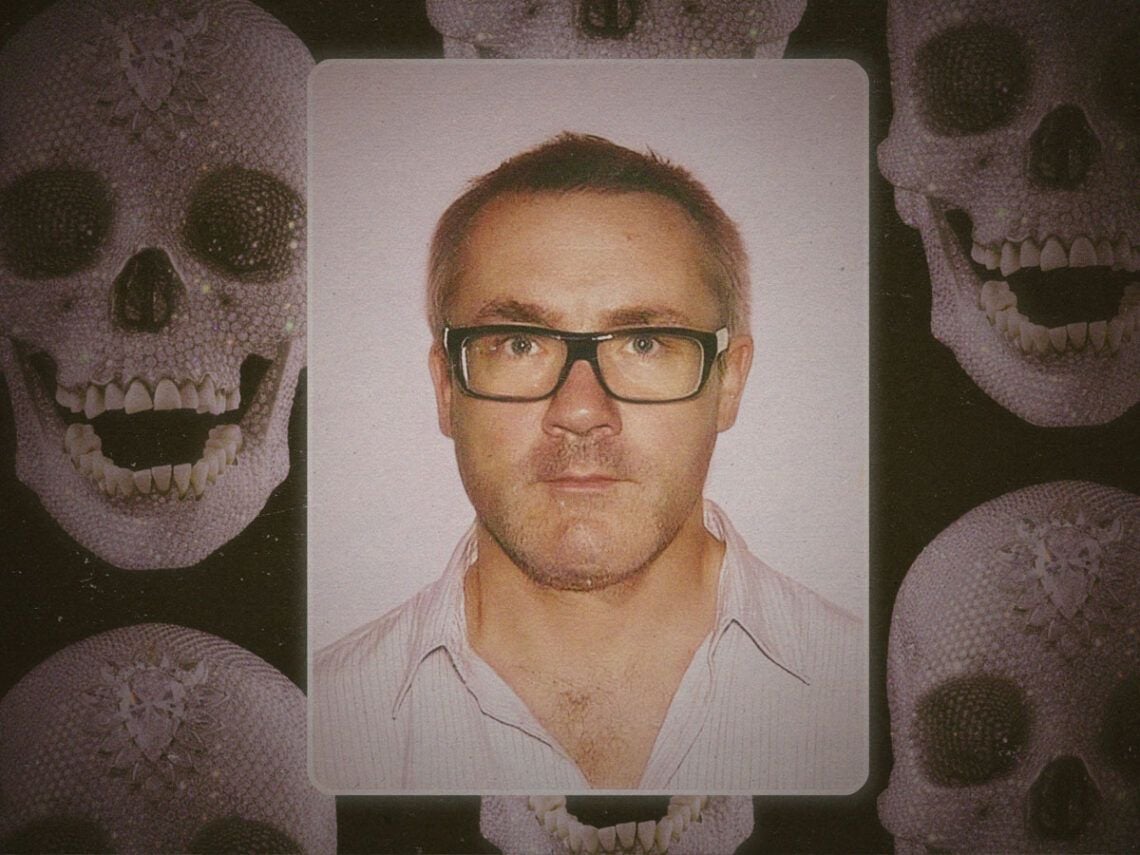
In the summer of 2008, a British teenager going by the name Cartrain walked into Tate Britain, admired Damien Hirst's installation Pharmacy, and pocketed a set of pencils that were part of the display.
Then he did something no ordinary thief would do: he made a wanted poster.
The poster laid out his demands with the theatrical precision of a ransom note. He wanted the money back that he had been forced to forfeit after Hirst's lawyers had come after him weeks earlier, and he wanted the right to sell his artwork again. If his terms were not met by 31 July, he warned, 'the pencils will be sharpened.' He signed off with a flourish: 'He has been warned.'
The feud had started small. Cartrain, then sixteen, had photographed Hirst's diamond encrusted skull For the Love of God and reworked the image into a piece of his own, which he sold through a site called 100artoworks.com. Hirst found out, and rather than shrug it off, he went to the Design and Artists Copyright Society and demanded the piece be pulled and every penny it had earned be surrendered. Cartrain complied. Then he went to the museum for his pencils.
What happened next says more about Hirst than about the teenager who baited him. Instead of laughing off a prank involving a stationery set worth, by any reasonable estimate, a few pounds, Hirst had Cartrain arrested. The charge on the books: theft to the value of five hundred thousand pounds. Had it held, it would have ranked among the largest art thefts in British history, not because of what was taken, but because of what a furious millionaire insisted it was worth.
It did not hold. The Metropolitan Police, weighing a teenager against a set of pencils against a mogul's wounded pride, dropped the charges. Officers investigating actual art crime, the kind involving stolen Old Masters and international smuggling rings, had apparently drawn a line somewhere Hirst had not.
The episode, first resurfaced by Dangerous Minds, sits at an odd hinge in Hirst's career. His imperial phase, the shark in formaldehyde, the spot paintings, the sense that he was reinventing what British art could be, had peaked in the mid 1990s. By 2008 the reputation was intact, but something in the temperament had curdled. An artist who had built a career on provocation discovered he had no patience for being provoked back.
Cartrain, for his part, seems to have understood something Hirst didn't: that the value of an object, and the value of a joke, are not the same thing, and confusing them in public rarely ends well for the man with more money.


