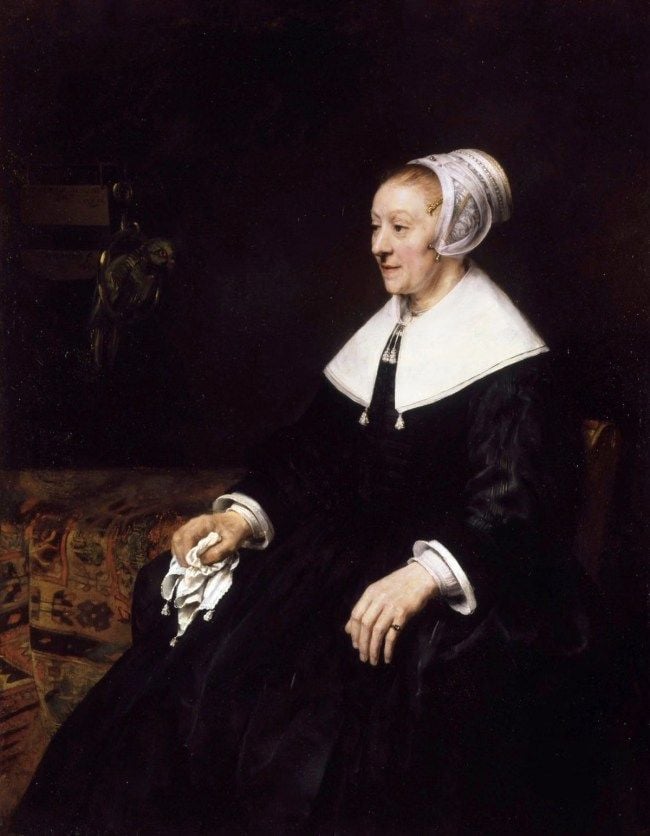
Catrina Hooghsaet is having her second brush with international incident in ten years, and she has been dead since 1685.
Her portrait, painted by Rembrandt in 1657, has just been slapped with a temporary export bar by the UK government, which needs to find £71 million, roughly $97 million, before the end of a nine-month deadline or watch her leave the country for good. The Department for Digital, Culture, Media and Sport has called her the most expensive object ever to be granted national treasure status in Britain.
What makes her worth stopping at the border is not just the brushwork. Hooghsaet was a wealthy Mennonite woman from Amsterdam who chose to live apart from her husband, an arrangement almost unheard of for a woman of her era and station. Rembrandt painted her late in his career, when his eye for interior life was at its sharpest, and the result is a portrait the UK's Reviewing Committee on the Export of Works of Art says offers rare insight into gender, religion and identity in the Dutch Republic. Committee chairman Andrew Hochhauser KC called it a work of outstanding significance to the study of portraiture, to Rembrandt's own body of work, and to the history of collecting his paintings in Britain, where the canvas has lived since the 18th century.
The painting was sold privately by Christie's last year, its second private sale since 2015. That earlier sale also triggered an export bar, resolved only when the buyer agreed to loan the work to National Museum Wales for three years. This time, the clock is running again: the current deferral expires on 26 December, giving the owners a fifteen-day window to weigh offers before a second, nine-month deferral period begins.
If nobody meets the asking price, Hooghsaet's three-century residency in Britain ends, and a woman who once refused to live where she was expected to may finally leave the country that has spent ten years refusing to let her go.


