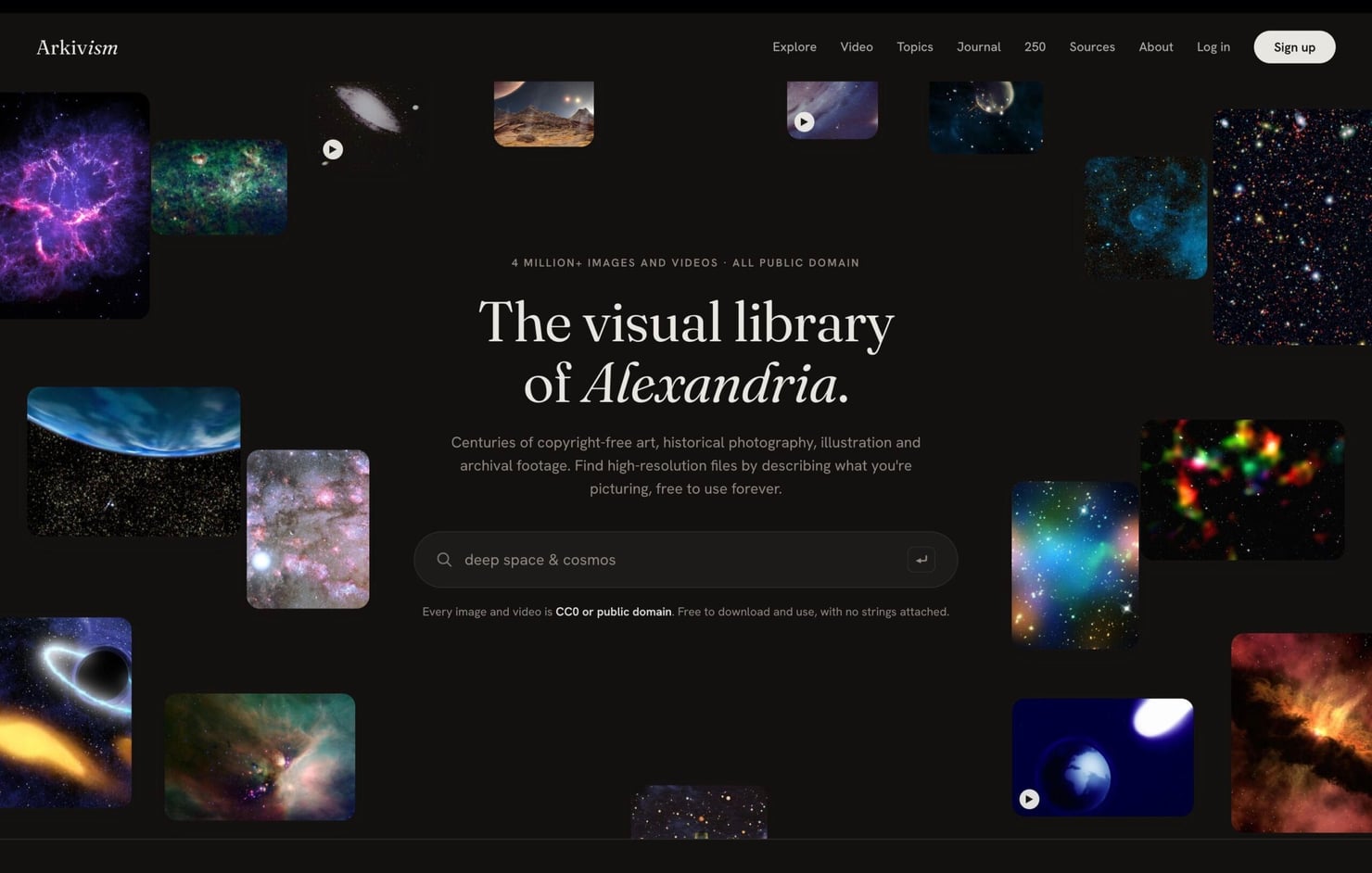
A stormy sea, ships and dark clouds: a search can begin with a scene, even when you have no artist or title in mind. That is the approach behind Arkivism, an independent index that lets users explore digitised collections through everyday descriptions. The wording of a query does not have to match the terms used in a catalogue.
The homepage reports more than four million images and videos from 51 collections. Sources include the Rijksmuseum, the Metropolitan Museum of Art, the Library of Congress and NASA’s Image and Video Library. The project provides a shared route into material spread across different websites, each with its own search system.
Users can also explore by similarity. Once they find an image close to what they had in mind, the service suggests related material. Searching requires no registration; a free account allows users to save their selections to personal boards.
According to Arkivism, the indexed material has been released by its source institutions under CC0 or identified as public domain. The service displays previews and copies of the institutions’ files, together with source information. Its terms acknowledge, however, that titles, dates, attributions and rights labels may contain errors. Links to the original catalogue records allow users to check those details.
The entry for Tree Filled with Crows, for example, presents an 1867 etching by Charles-François Daubigny held at the Metropolitan. Alongside the basic information and a ready-to-copy credit line is a link to the museum’s own record. There, users can find the work’s dimensions, accession number and the gift through which it entered the collection in 1923. A visual search can thus lead to the documentation of a specific object in a museum collection.