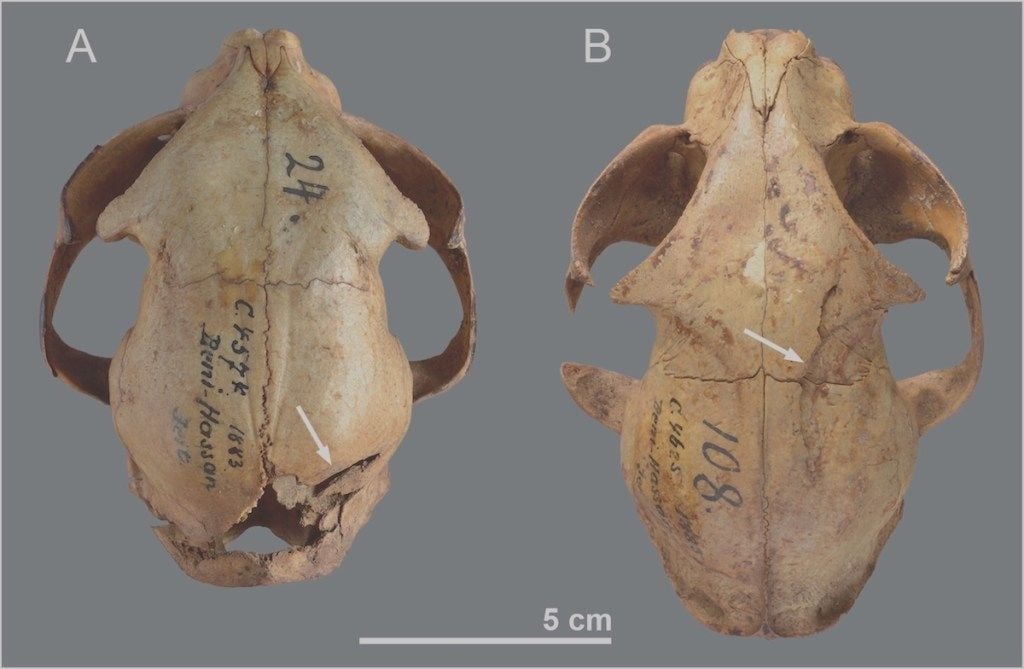
Fourteen of the 131 cat skulls from Beni Hassan in Middle Egypt show traumatic injuries. The remains, recovered from votive mummies and now held at Vienna’s Natural History Museum, were examined by Wim Van Neer, Bea De Cupere and Claudio Ottoni. Their study is published in the Journal of Archaeological Science. biblio.naturalsciences.be
The researchers identified injuries associated with both human intervention and encounters between cats. Some show signs of healing, indicating that the animals survived for some time afterwards. www.sciencedirect.com
For the healed injuries attributed to humans, the authors consider several possible explanations: unsuccessful attempts to kill animals intended as votive offerings, or efforts to control them or separate fighting cats. They distinguish these cases from fatal injuries, which they associate with the subsequent preparation of mummies. www.sciencedirect.com
The collection also includes jungle cat remains with pathological changes similar to those found in the other felines. According to the researchers, these similarities suggest that the animals were kept together. Taken together, the injuries and signs of disease lead the authors to suggest that the cats lived in confined conditions that could have encouraged the spread of infection and aggression between animals. www.sciencedirect.com