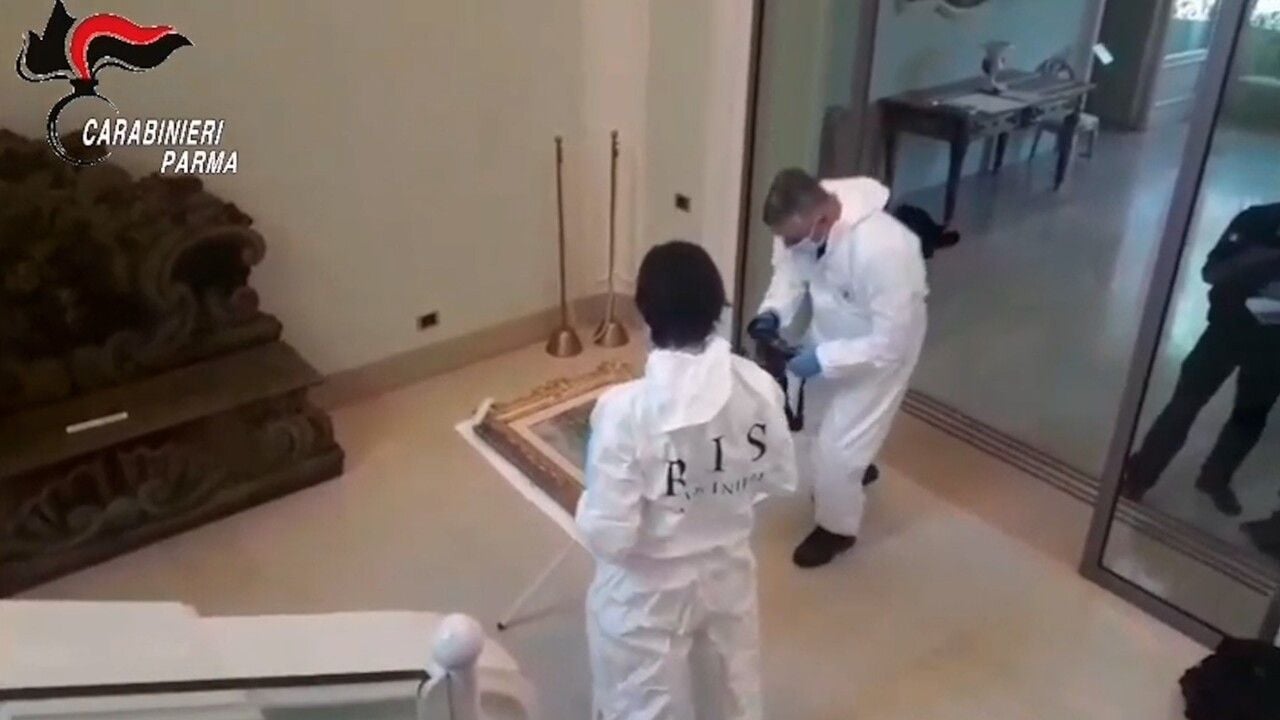
On the night of 22 March, a gang slipped into the Magnani Rocca Foundation in Mamiano di Traversetolo, near Parma, and walked out with three works worth a combined 9 million euros: a Cézanne watercolour, a Renoir oil, and a Matisse aquatint. Nearly six months later, on 2 September, all three were carried back into the museum's Sala Goya and handed to the people who run it.
The recovery came down to old fashioned police work rather than luck. Investigators from the Parma carabinieri and the cultural heritage protection unit in Bologna, working under the Parma public prosecutor's office, traced the stolen paintings as the thieves tried to move them out of Italy. "The thieves were trying to sell the works abroad," said provincial carabinieri commander Andrea Pagliaro, a detail that explains the urgency behind the investigation: once a painting like this crosses a border into a private collection, it can vanish for decades.
Nine people have been investigated over the theft, and five, all of Moldovan origin, have been arrested on charges including criminal association and theft. The case is a reminder that art theft in Italy is rarely the work of a lone obsessive with a ladder and a grudge; it is increasingly the province of organised networks who treat paintings the way others treat stolen cars, moving them fast, across borders, toward buyers who ask no questions.
What came home is worth pausing on. Cézanne's "Tasse et plat de cerises", a watercolour valued at around 6 million euros, and Renoir's "Les Poissons", worth roughly 3 million, are the kind of intimate, domestic subjects, a cup of cherries, a plate of fish, that made both painters revolutionary in the first place: they found the extraordinary in the unremarkable. Matisse's "Odalisque sur la Terrasse", an aquatint valued at 20,000 euros, is the most modest of the three in market terms, but no less part of the story.
"These have been difficult months, this is an extraordinary day," said Gino Gandolfi, the Foundation's president, at the handover ceremony. It is a rare kind of institutional relief: not the abstract satisfaction of a case closed, but three specific objects, back on three specific walls, where anyone can walk in and look at them again.


