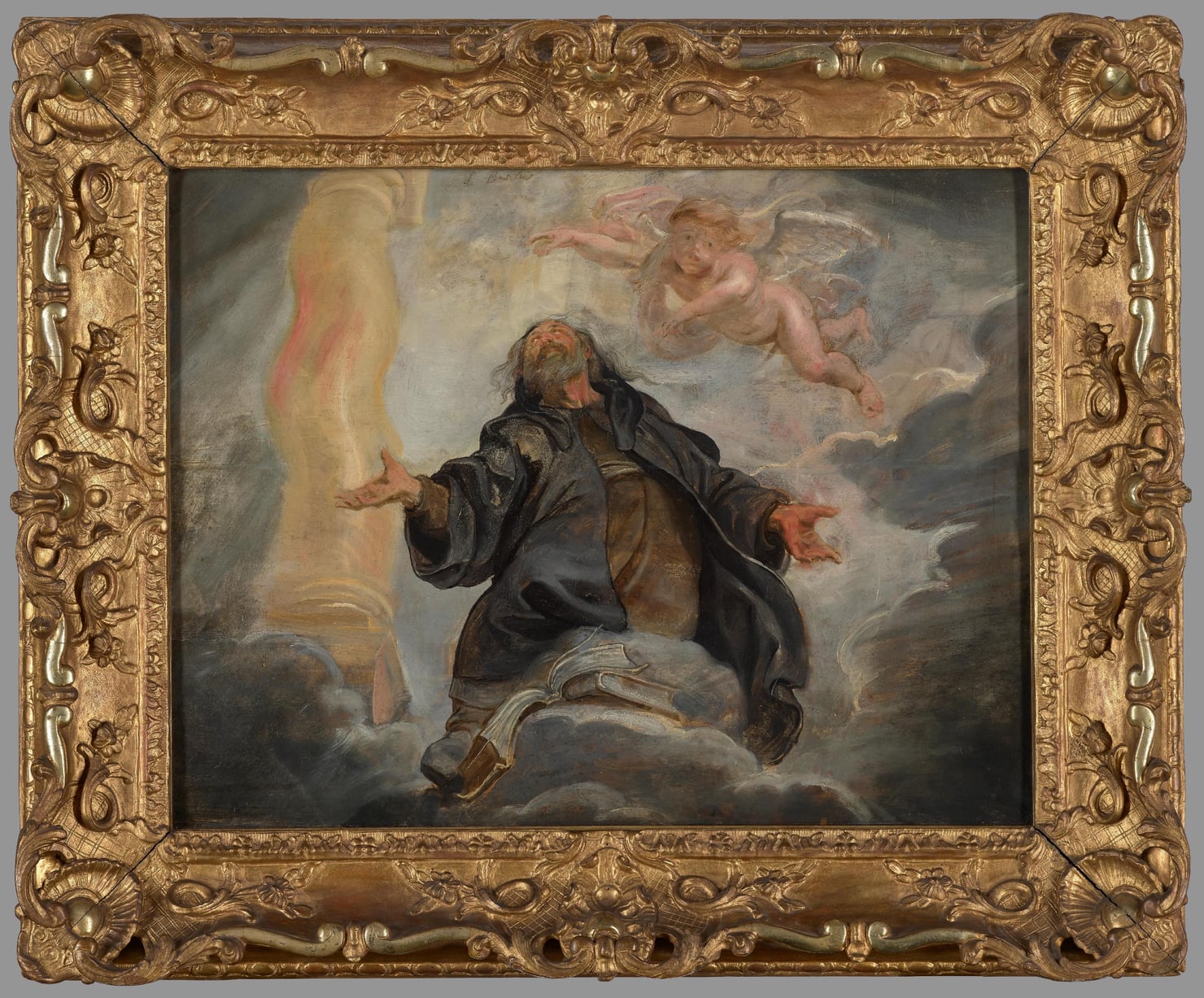
Five oil sketches by Peter Paul Rubens are back together at the Ducal Museum in Gotha, Germany, for the first time in more than eighty years. They form the centrepiece of “Auf Rubens!”, an exhibition that opened on 10 November 2026 and runs until 9 May 2027. The works belonged to the museum’s historic collection before being dispersed in the aftermath of the Second World War.
Painted around 1620, the sketches were preparatory studies for some of the 39 paintings commissioned for the ceilings of the side aisles and galleries of Antwerp’s Jesuit church, now dedicated to St Charles Borromeo. The ceiling paintings were destroyed by fire in 1718, leaving the sketches as a surviving record of the project. The contract, signed on 29 March 1620, stipulated that Rubens himself should paint the studies rather than delegate them to pupils in his workshop.
The group was split up in 1945. The ducal family had three of the works transferred to Coburg, in the western occupation zone; they subsequently entered the American art market. The other two, St Athanasius and St Basil, were taken to the Soviet Union by the Red Army. Returned to East Germany in 1958, they went back on display in Gotha in 1959.
Bringing back the three missing works required separate agreements. St Gregory of Nazianzus returned from the Buffalo AKG Art Museum in 2024. In the summer of 2026, an agreement was reached for the return of The Prophet Elijah in the Golden Chariot, which had been held in an American private collection.
Completing the group is St Augustine, on long-term loan from the Foundation E. G. Bührle Collection in Zurich.