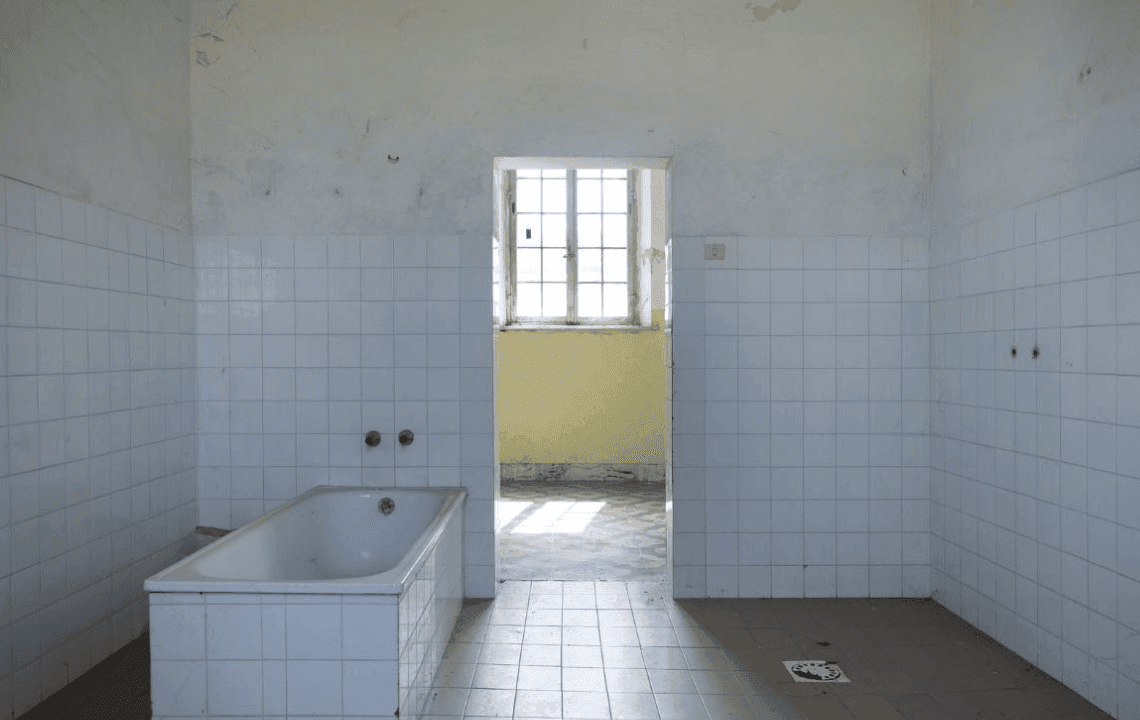
Italy’s former psychiatric hospitals occupy buildings as varied as convents, villas, fortresses and agricultural colonies. Some stand abandoned. Others have been restored or given new purposes. In Manicomi italici, photographers Silvia Camporesi and Luca Marianaccio look at how these places remain part of the towns and landscapes around them.
Over a year, they photographed at least one site in each of Italy’s 20 regions. Camporesi worked mainly in the north and Marianaccio in the south, producing more than 100 images of the buildings, their present condition and their relationship with their surroundings.
Their work begins with the changes set in motion by Italy’s Law 180 of 1978, which initiated the gradual closure of psychiatric hospitals. In the decades that followed, the buildings took different paths: some were left unused, while others became museums or found new functions.
Camporesi has explained that the aim was not to photograph abandonment for its own sake. The buildings are part of a social history that remains visible. The images attend both to traces of their former use and to what has changed since they closed.
One example is the Lombroso pavilion at the former San Lazzaro psychiatric complex in Reggio Emilia. It became the Museum of the History of Psychiatry and opened to the public in 2012. Its rooms, materials and some signs of deterioration have been retained to help document the site’s history.
That museum will host the first public presentation of Manicomi italici from 27 September 2026 to 6 January 2027. Curated by Cesare Pomarici, the exhibition brings together 20 photographs, ten by each photographer. Afterwards, the works will enter the permanent collections of the Civic Museums of Reggio Emilia.


