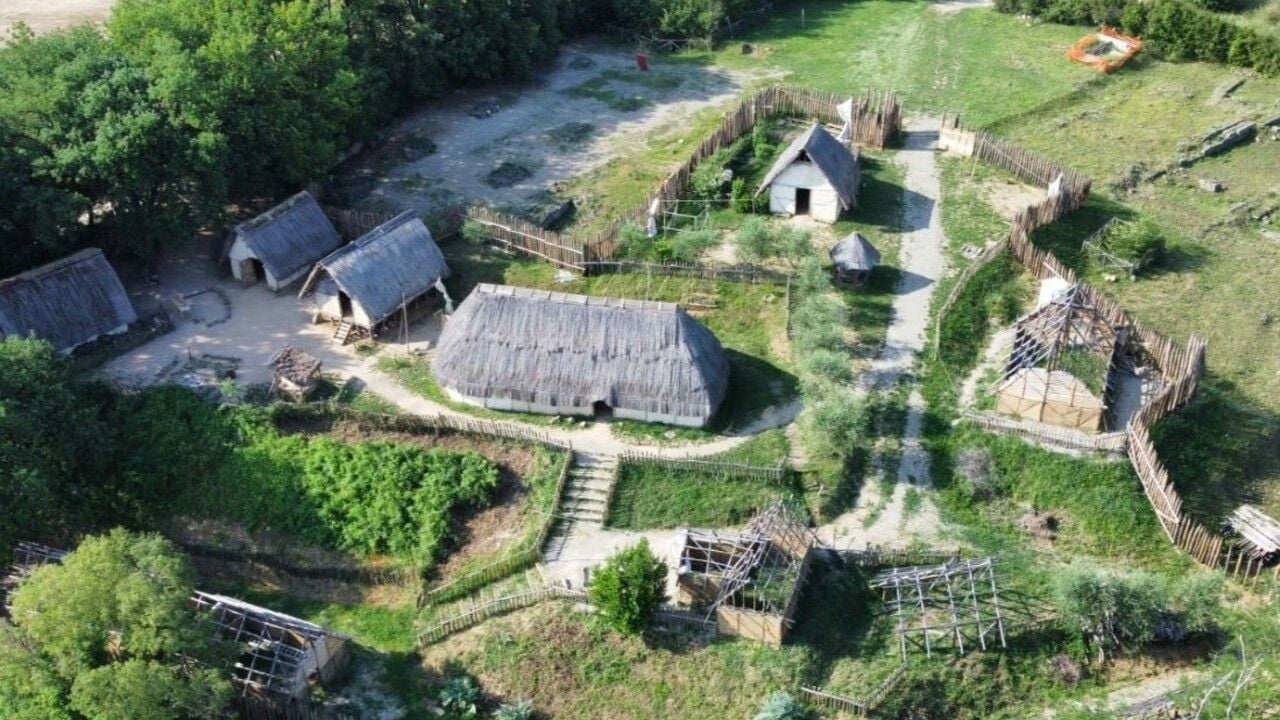
On Poggio Imperiale hill in Poggibonsi, the Archeodromo recreates at full scale a Carolingian-period village identified by archaeologists from the University of Siena. According to the municipality, the open-air museum now includes 14 structures, among them homes, workshops and service buildings, as well as a large palisade. The completed Archeodromo was inaugurated on 24 October 2026.
In the reconstructed spaces, archaeologists and specially trained staff take on the roles of carpenters, blacksmiths, dyers and other craftspeople. Through these living history activities, they show visitors the work and daily routines of the village, connecting clothing, tools and everyday practices with archaeological evidence.
The village was built in stages. The first section opened in October 2014; a second, in January 2016, expanded the space for visits, learning and experimental activities. Poggibonsi’s municipal council funded the final phase with €375,000. The project grew from a collaboration between the council, the University of Siena, professionals and associations.
School visits combine a tour of the reconstructions with workshops and opportunities to try out customs and crafts from the past. According to the municipality, the Archeodromo has welcomed more than 46,000 students since it opened.
For Marco Valenti, the Archeodromo’s scientific director, helping people understand the results of research is one of archaeology’s tasks. In his view, clear and engaging language is one way to share that knowledge.