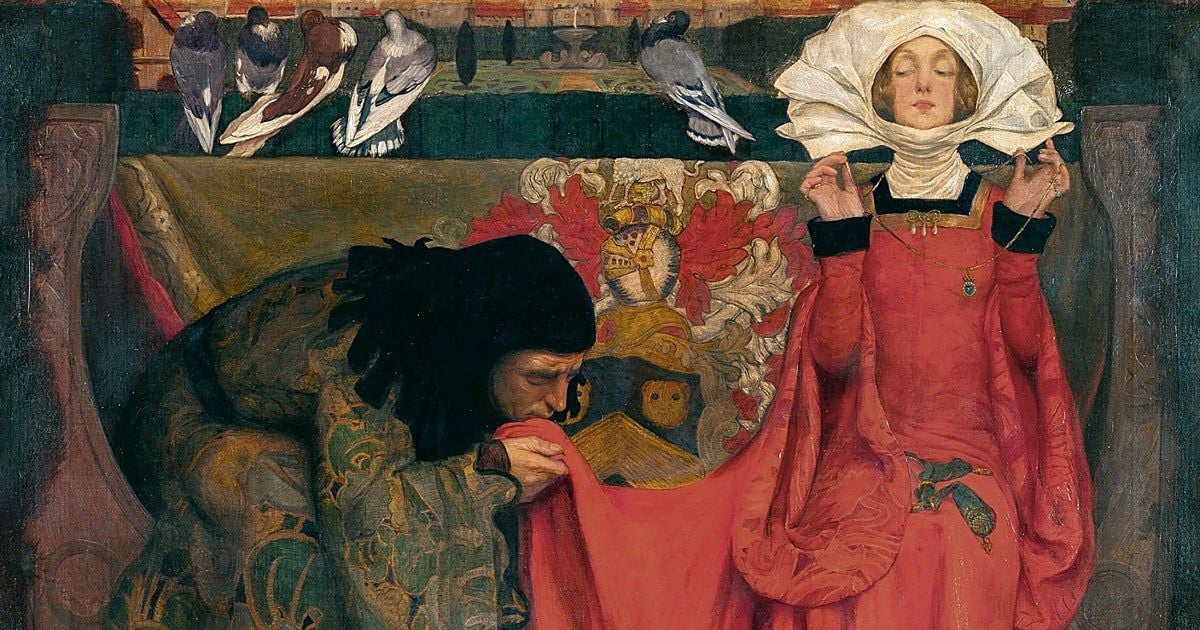
The Pre-Raphaelite Brotherhood was founded in Britain in 1848 by seven men. But the history of Pre-Raphaelite art also runs through the work of women who adopted and reshaped its subjects, methods and visual language.
At Fundación MAPFRE in Madrid, Preraffaellismo. Itinerari femminili (1850-1914) brings together nearly 130 works from 65 public and private collections. Curated by Pamela Gerrish Nunn, the exhibition includes work by Elizabeth Siddal, Joanna Boyce, Julia Margaret Cameron, May Morris and Evelyn De Morgan. It remains open until 10 January 2027, then travels to La Piscine in Roubaix from 5 March to 27 June 2027.
The exhibition also examines the conditions in which these artists worked. Access to academic training, anatomical study and official exhibition spaces was severely restricted for women. Many learnt through informal networks, shared workshops and personal connections within Pre-Raphaelite circles. As art schools and opportunities to exhibit grew during the second half of the nineteenth century, their professional possibilities widened.
The Pre-Raphaelite emphasis on close observation gave women artists subjects close at hand: gardens, domestic interiors, nearby landscapes and family members. These offered ways to develop their own work and demonstrate technical skill. Yet attention to detail could also be interpreted through the stereotypes that shaped how women’s art was judged.
Paintings, watercolours, photographs, textiles, ceramics and stained glass show how their work extended into illustration, design and the decorative arts. Seen together, they make visible the different ways women participated in the development of Pre-Raphaelitism.


