At one end of the seesaw, Yvonne Rainer screamed; at the other, Robert Morris read ARTnews. Then they walked up and down the structure, trying to keep it balanced. This was Simone Forti’s See-Saw, a work created in 1960 and performed in Yoko Ono’s New York loft in May 1961.
Rainer recalled the evening in a remembrance of Forti. The choreographer had invited her to take part, leaving her and Morris free to decide how to move and what sounds to make. For Rainer, who was still finding her way in dance, that freedom was a revelation.
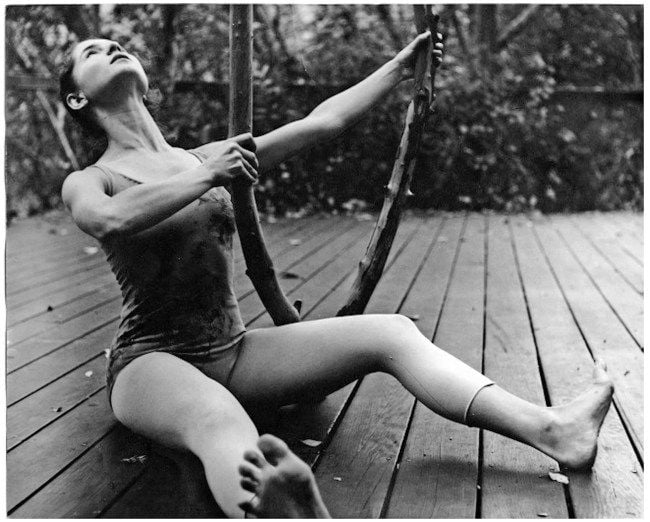
See-Saw was one of Forti’s Dance Constructions, works that brought everyday movements together with simple objects such as ropes and wooden boards. In this piece, two performers moved along a board, balancing their bodies against each other. Every shift changed the other person’s position too.
The two artists had met in the summer of 1960 at a workshop led by Anna Halprin in Marin County, California. Forti was already working with Halprin; Rainer was a beginner. Rainer remembered being struck by Forti’s boldness and the ideas about improvisation she was developing.
Rainer credited Forti’s imagination and independence with helping to shape her own understanding of what it meant to be a choreographer. In See-Saw, she encountered that possibility in practical terms: a structure to keep in balance, and decisions entrusted to the people performing the work.