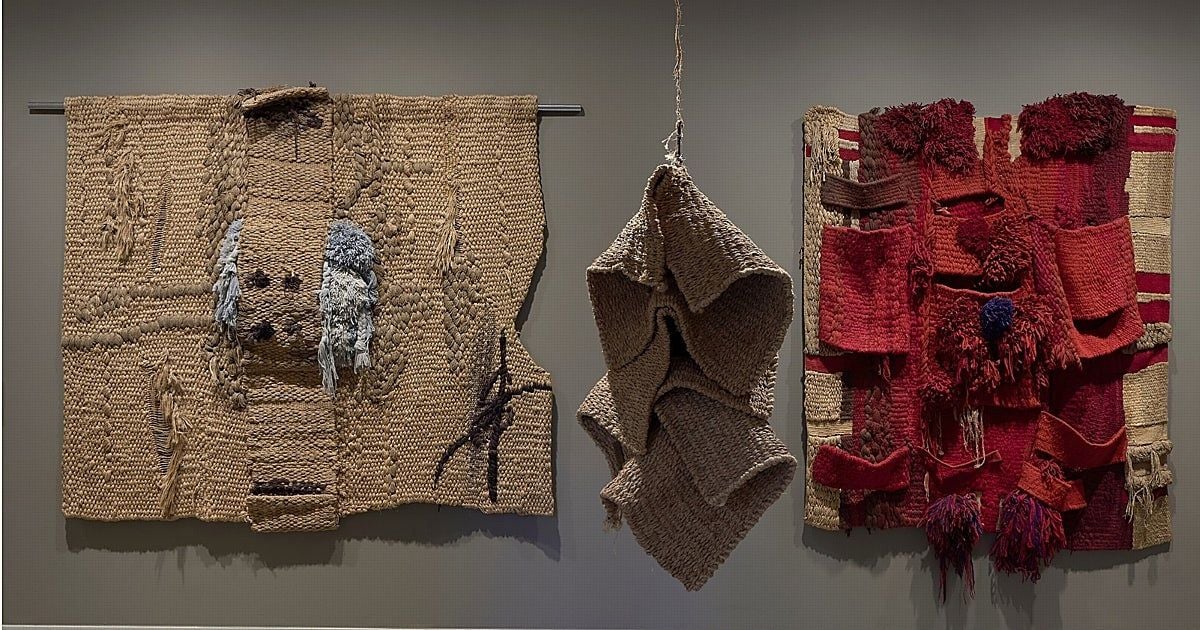
Carpets, embroidery and tapestries run through two Madrid exhibitions exploring textiles as art and as part of the spaces around us. Historic and contemporary works invite visitors to look at how textiles are made, as well as how they help define a room.
Colecciones Masaveu. Arte textil, at the Fundación María Cristina Masaveu Peterson from 7 October 2026 to 18 July 2027, presents more than 80 works dating from the 15th century to the present. Historic carpets, embroidery and tapestries sit alongside contemporary pieces in two groups, divided into six and nine sections respectively. The exhibition brings a less familiar part of the Masaveu collections into public view.
Arranged by theme rather than in strict chronological order, the exhibition draws comparisons across periods, techniques and artistic approaches. Its display is part of that exploration: in some cases, it recalls the historic practice of hanging tapestries in rooms or follows the presentation envisaged by the artists.
The relationship between textiles and space is central to El plano flexible. La colección de textiles del Banco de España, open from 28 September 2026 to 28 March 2027. It brings together nearly 50 works from the 17th to the 21st century, including carpets, tapestries, paintings, photographs, videos, documents and coins.
The exhibition takes its title from a 1957 essay by Anni Albers. As its introduction explains, Albers described fabric as a surface that could transform a space, filter light and absorb sound.
The Banco de España’s own history offers an example. During the refurbishment of its General Shareholders’ Meeting Hall, architect Juan de Zavala incorporated six Flemish tapestries by Geraert Peemans. They became part of the room’s architecture and helped improve its acoustics.
Alongside historic works, the exhibition presents contemporary approaches to labour, memory and the passing on of knowledge. Among them are six tapestries by Dora García, made for the Salón de Cobradores. The hands they depict repeat the gestures of giving and receiving, which the exhibition connects with exchange. Made for that particular room, the tapestries also contribute to its acoustics.