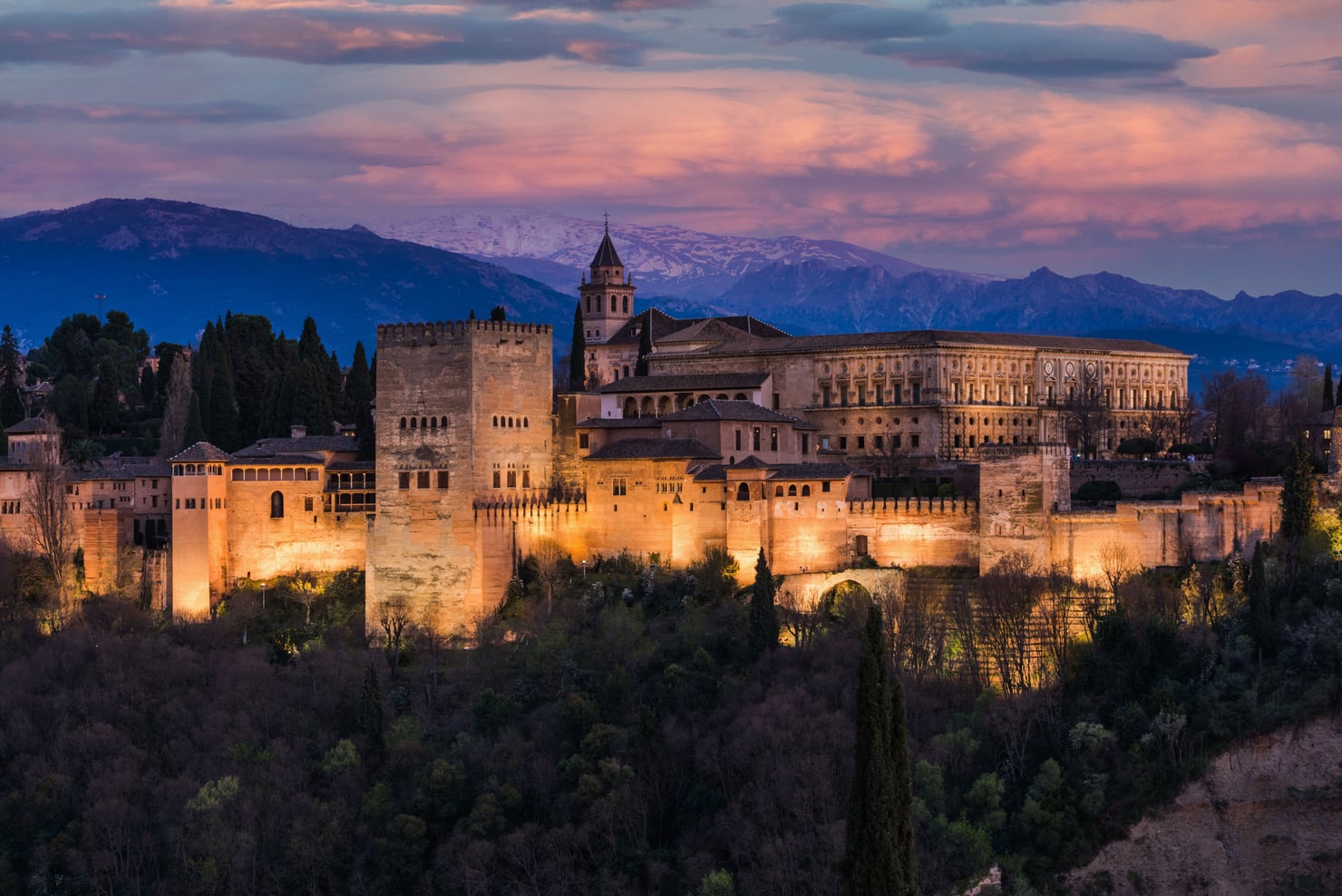
On a recent night in Granada, the ground moved. A swarm of earthquakes rattled the province, the kind of seismic event that sends conservators racing to check load-bearing walls by torchlight and guesswork. This time, someone had a better option: they asked the building's digital twin.
The Alhambra, the fortress palace built by the Nasrid dynasty and one of the most visited monuments on Earth, now has a complete virtual replica of itself, updated in real time by 62 sensors woven through its courtyards, halls and gardens. It is believed to be the first full digital twin ever built for a UNESCO World Heritage Site, according to the Junta de Andalucía, which unveiled the platform this week. When the earthquakes hit, engineers did not have to wait for a physical inspection. They opened the model and watched the monument's structural stress redistribute itself, palace by palace, in something close to real time.
The project is called Alhambra Living Lab, developed with the University of Granada and the technology firm Libelium, backed by more than 2.3 million euros, three quarters of it from the European Union's NextGeneration recovery funds. What it has built is less a 3D tour than a nervous system. Thirty nine sensors track visitor flow and crowd density. Seven monitor the structural behaviour of historic buildings, the almost imperceptible creep of settling foundations or straining arches. Sixteen more log air quality, soil conditions, noise and airborne particles. All of it feeds a live three dimensional model that does not just show what is happening inside the Nasrid walls, it forecasts what is about to.
That distinction, between watching and predicting, is the real story here. Heritage conservation has traditionally been reactive: a crack appears, then someone investigates. José Antonio Nieto, the regional minister overseeing digital development, described the shift as moving from managing the Alhambra 'from observation' to managing it 'from anticipation'. The system's engineers speak of catching 'silent fatigue', the deformations too slow and too small for a human eye doing a walkthrough to ever notice, until it is too late.
The earthquake gave the platform an unplanned demonstration of its other function, too: crowd safety. Sensors in the most sensitive areas, the Nasrid Palaces and the Gate of Justice among them, tracked how real visitors moved and sheltered during the tremors, retreating towards open ground like the Plaza de los Aljibes. Officials say the actual evacuation patterns matched what the simulator had predicted, and confirmed that the highest risk zones were fully cleared.
There is an obvious tension folded into a project like this: a monument built by hand in the fourteenth century, its stucco and muqarnas carved by craftsmen who left no sensors and no data behind, now has its future guarded by algorithms trained on nine converging technologies, from blockchain to AI to extended reality. The Alhambra has survived reconquest, earthquakes, centuries of neglect and decades of mass tourism. Whether a machine that can now sense its fatigue before it happens changes that survival story, or simply documents it more precisely, is the question Granada has just started to answer.


