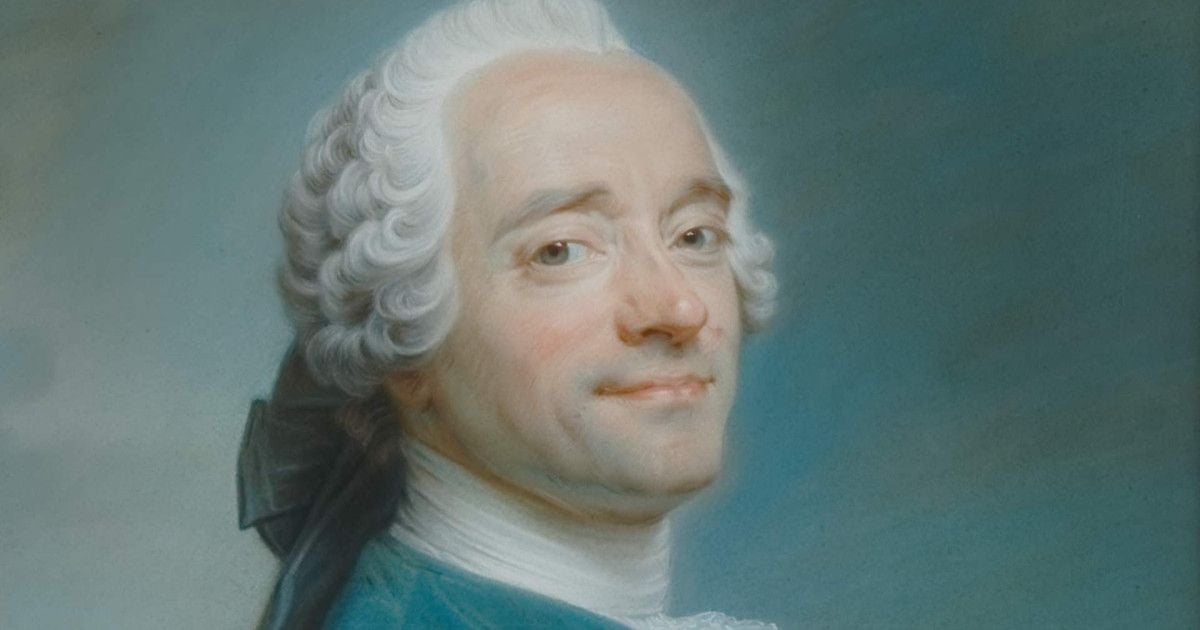
170 French drawings from the seventeenth and eighteenth centuries hang at the Musée de Picardie in Amiens until 27 September 2026. They come from 28 private collections. None of the lenders wants to be named.
Three quarters of the sheets have never been published or shown to the public, according to Connaissance des Arts. That figure is the argument of the show. 'Dessins français des collections privées françaises', organised by Pierre Stépanoff, Patrick Ramade and Nicolas Schwed, quietly corrects the assumption that the great archive of French draughtsmanship of the period sits in the Louvre's cabinet. Much of it sits in private houses, catalogued by owners, seen by nobody.
The hang is thematic, with monographic anchors for Simon Vouet, Antoine Watteau and Jean-Honoré Fragonard. Around them: a Claude Lorrain landscape reduced to its essence; a study for Vouet's 'Le Christ à la colonne'; Charles-Nicolas Cochin's 'Couple jouant au trictrac, éclairé par une chandelle' (c. 1750), which the exhibition likens to Kubrick's Barry Lyndon (1975); two Boucher sheets that are preparatory studies for 'Renaud et Armide' and 'Aurore et Céphale'; a Boucher pastel portrait, rare because he almost never worked in pastel.
The scholarly finds sit alongside the marquee names. A 'Femme en costume de ballet' (c. 1610) signed T. Remy, close in style to Jacques Bellange, appears in public for the first time; only one other work under that name is known, at the Metropolitan Museum. The owner of a Jupiter drawing identified its author, Jean-Baptiste Daniel, by chance, through a 2012 article by Marie-Christine Gloton on the ceiling of the hôtel Grimaldi-Régusse in Aix-en-Provence.
The two precedents, Caen in 2011 and Rennes in 2015, covered Italian material. The French chapter had been missing. It turns out it was already at home, at 28 addresses no one is allowed to know.


