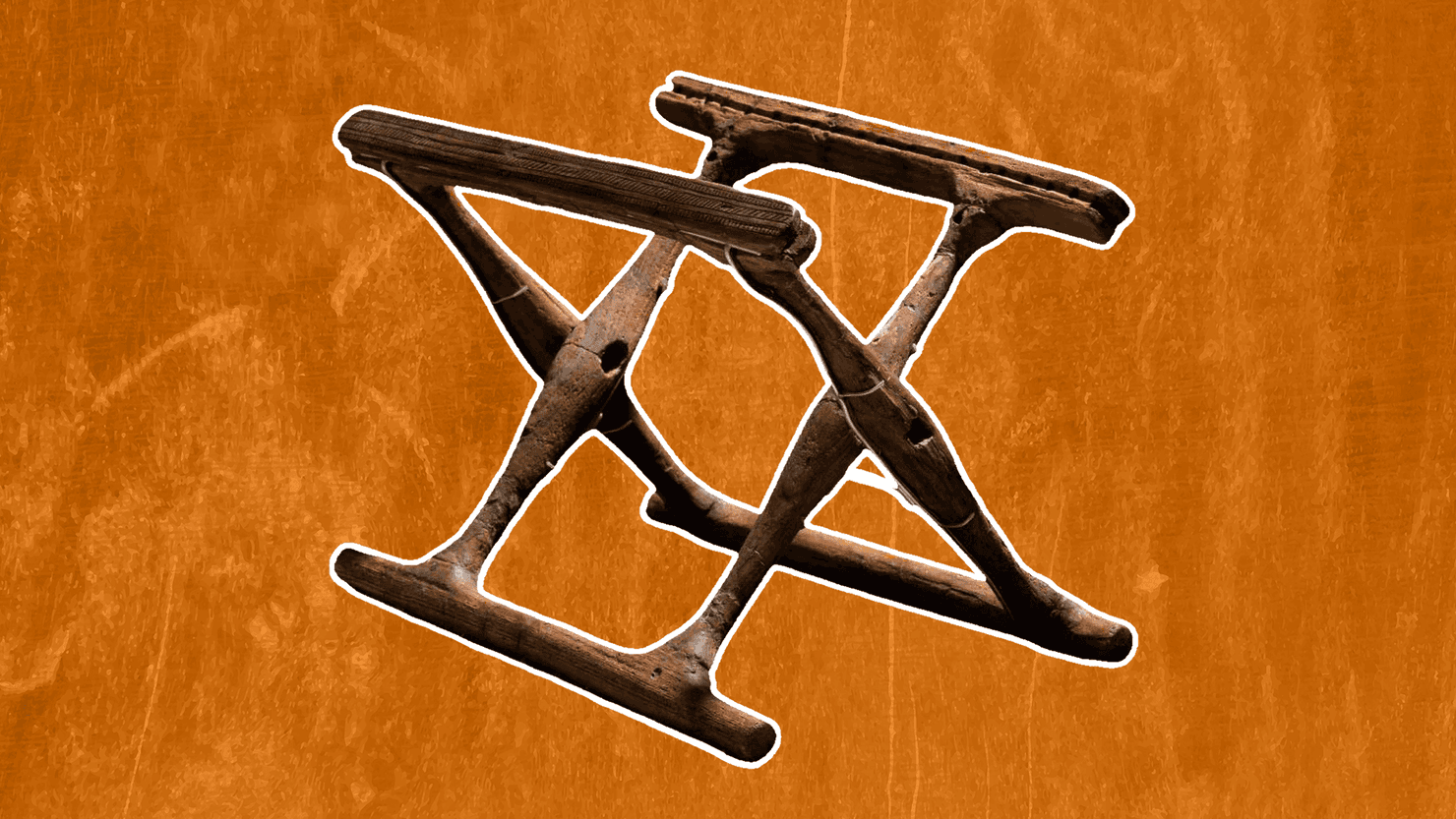
Around 1400 BC, in what is now southern Denmark, a man of high standing was buried inside an oak coffin beneath a mound at a place called Guldhøj. Beside him, his mourners placed a chair. It had a wooden folding frame and a seat made of otter skin, the kind of object a person of rank might have carried from one gathering to another, set up, sat upon, folded away again.
Every other chair like it, from every corner of Bronze Age Europe, has vanished. Wood rots, hide perishes, and three and a half thousand years is a long time to ask anything to last. What makes the Guldhøj chair extraordinary, as Live Science's Kristina Killgrove reports, is not that it is old. It is that it survived at all, and survived complete: frame, joints, seat, the lot. It is, by current knowledge, the only fully preserved chair from the entire Bronze Age of Europe.
Credit for that goes to the mound itself. Denmark's Bronze Age barrows often sealed their oak coffins beneath thick layers of turf, and under the right waterlogged, oxygen-starved conditions, that turf could act as a kind of accidental time capsule, keeping wood, textile, hair and skin from ever fully decaying. It is the same remarkable chemistry that has given Denmark its famous 'bog bodies' and their perfectly preserved clothing. At Guldhøj, it happened to preserve furniture instead of flesh.
The chair now sits in the National Museum of Denmark, a genuinely rare witness to how someone once actually lived, not just how they were buried. Most Bronze Age funerary finds are the things chosen to accompany the dead: weapons, ornaments, offerings. A folding chair is different. It speaks of a life lived upright and mobile, of feasts and councils where rank needed a seat that could travel with its owner from hall to hall, mound to mound.
Nobody knows the man's name, or what he said from that chair while he was alive to sit in it. But the chair remembers what he was: someone important enough that when he died, his people gave him back the one seat that mattered, and folded it into the earth beside him for good.


