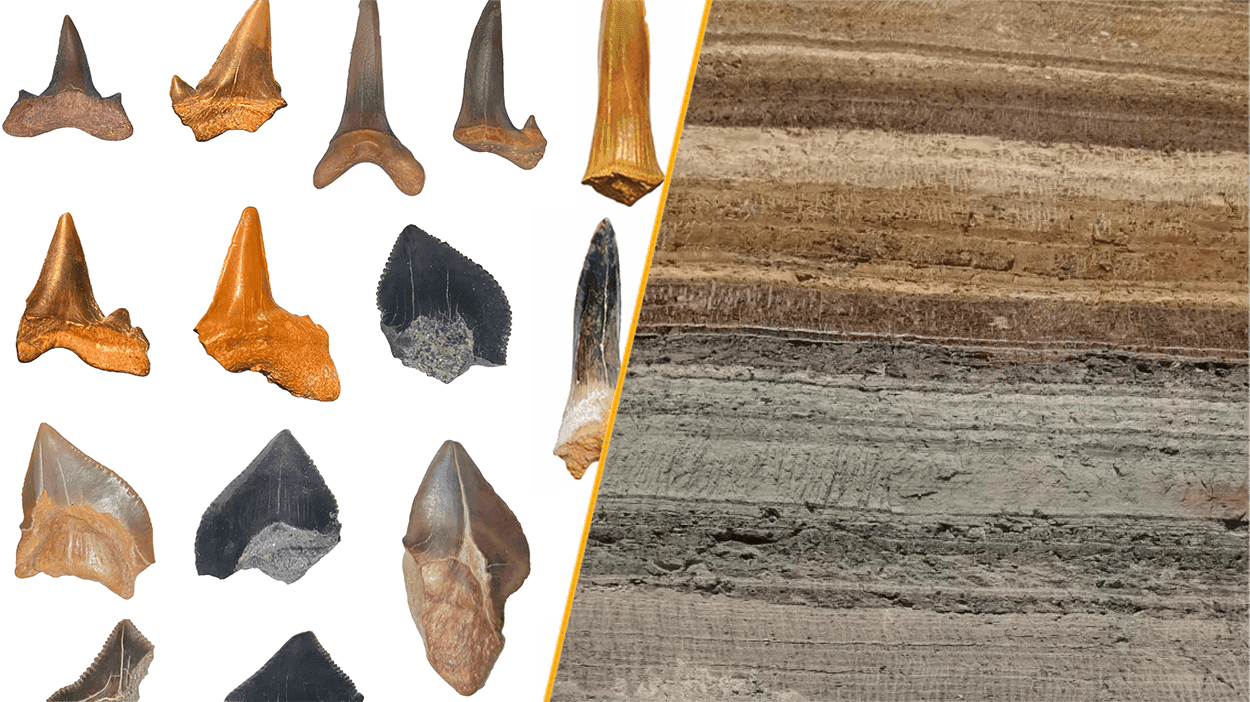
Seven species of shark once hunted in what is now one of the driest places on Earth. Between 2020 and 2022, researchers combing the Abu-Tartur Plateau in Egypt's Western Desert dug up fossilized teeth scattered across the sand like a scene from a crime that took place millions of years ago, not a robbery but a feeding ground, preserved in stone long after the water disappeared.
The find, published on 18 August in the journal Cretaceous Research, reads like a paradox: a shark graveyard hundreds of kilometres from any coastline, in a landscape now defined by heat and dust. But the Western Desert was not always a desert. For long stretches of the Cretaceous period, it lay beneath a shallow sea, and the teeth left behind are the clearest evidence yet of just how alive those waters were.
Seven species in one place is a striking number. Shark teeth fossilise easily and turn up often, but finding this many kinds concentrated in a single site lets researchers reconstruct something closer to an ecosystem than a single lucky discovery: who hunted whom, what the food chain looked like, how a sea now buried under sand actually functioned when it was full.
That is the real find here, not a single spectacular tooth but a portrait of a vanished ocean assembled fragment by fragment. Every fossil pulled from the Abu-Tartur Plateau is a small, hard proof that the desert remembers what the surface has long since forgotten: that it used to be underwater, and that something with teeth was there before anyone thought to look.


