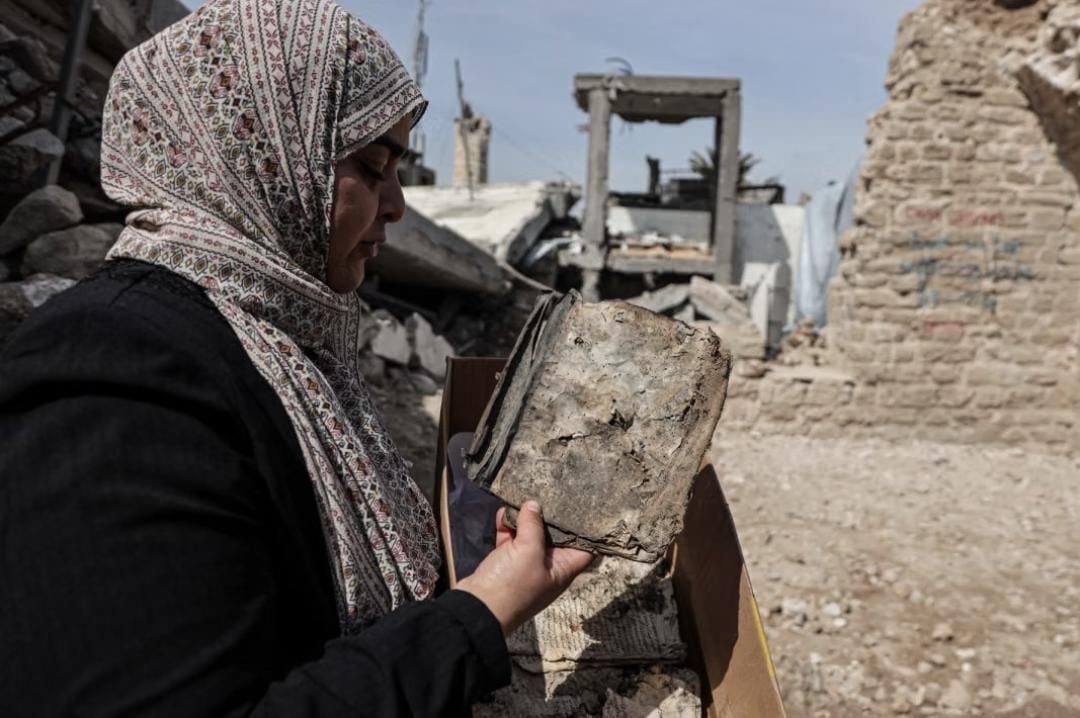
Hashim and Al-Amassi have helped preserve more than 25,000 pages of endangered manuscripts from the Mamluk and Ottoman periods. The material includes Qur’anic texts and works on law, medicine and literature. Their work, recognised by UNESCO, has involved digitisation, conservation and emergency interventions.
Part of the work focused on the library of the Great Omari Mosque in Gaza’s Old City, which was largely destroyed during Israeli bombardment in December 2023. With support from the British Library’s Endangered Archives Programme and other organisations, Hashim and Al-Amassi took part in recovering and documenting the surviving materials.
The UNESCO recognition also reflects what they helped establish to continue this work: Gaza’s first specialist manuscript restoration laboratory. It strengthens the local expertise needed to care for the region’s documentary heritage.
Digitising a manuscript makes its contents easier to preserve and consult when the original is at risk. But a digital copy cannot replace the work of protecting the physical document and the conditions in which it is kept.
The recognised work therefore brings together emergency response and long-term conservation. The manuscripts remain at risk, and further documentation, stabilisation and conservation work is planned.
Preserving what has been recovered will depend on expertise, facilities and continuity, so the materials can be studied and passed on over time.


