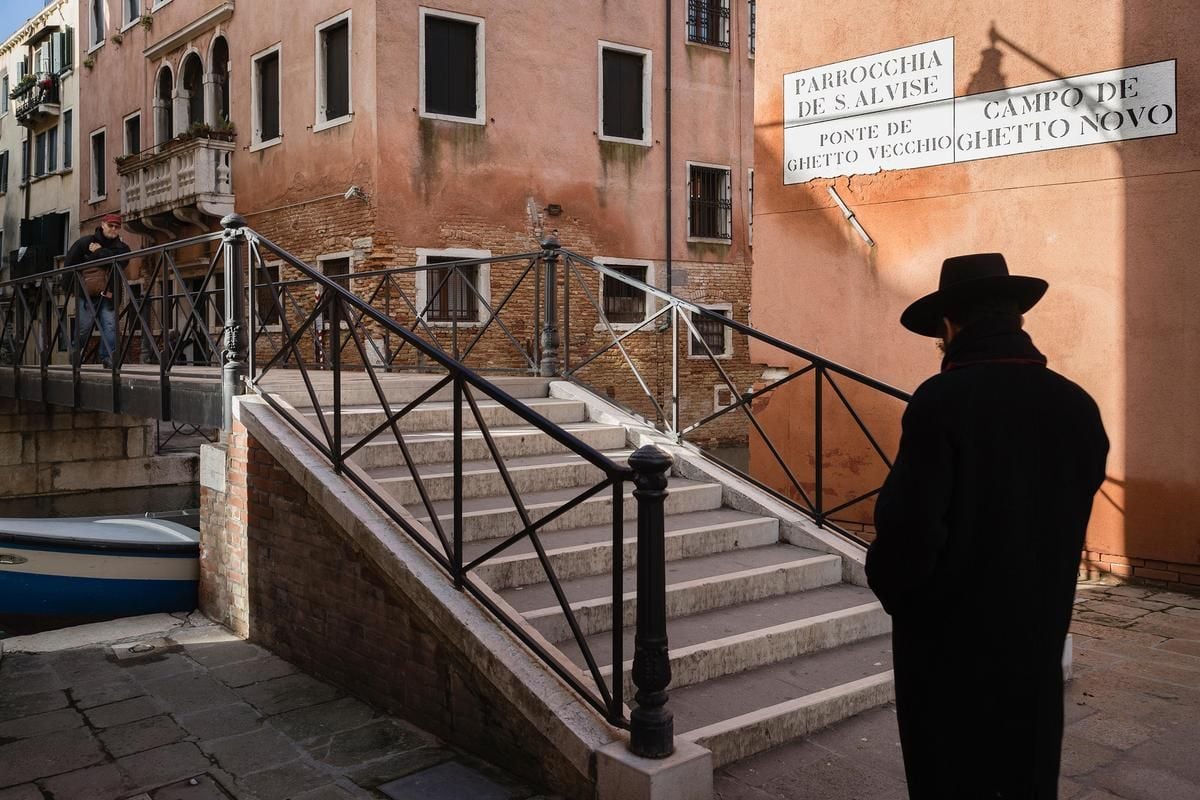
Each evening, the gates of Venice’s Ghetto were shut and did not reopen until dawn. Guards watched the enclosed district and patrolled the surrounding canals. The residents themselves paid the people assigned to watch them. Separation from the rest of the city had fixed boundaries and hours.
On 29 March 1516, the Venetian Senate ordered Jews already in the city, and those who arrived later, to move into the houses of the Ghetto Nuovo, near San Girolamo. Families living in different parts of Venice were compelled to gather in one area of Cannaregio.
The place already had a name. According to the most widely accepted explanation, it came from the area’s former foundries, where metal was cast to make cannon. Documents record several spellings, including geto, getto and ghetto. The name did not originally mean a Jewish quarter: it was linked to work once carried out there.
Venice was not the first European city to impose residential segregation on Jews; the practice already existed elsewhere. But the Venetian name spread during the sixteenth century to describe districts where Jews were required to live. This was not simply a matter of living near one another, but of being denied the choice to live elsewhere.
In Rome, the quarter where Jews were confined in 1555 was initially called the ‘serraglio dei giudei’, or ‘enclosure of the Jews’. From 1562, it was called a ghetto, following the Venetian example. The same word was used for the quarter established in Florence in 1571. A name associated with Cannaregio’s foundries had become a term for compulsory Jewish residential districts in other Italian cities.