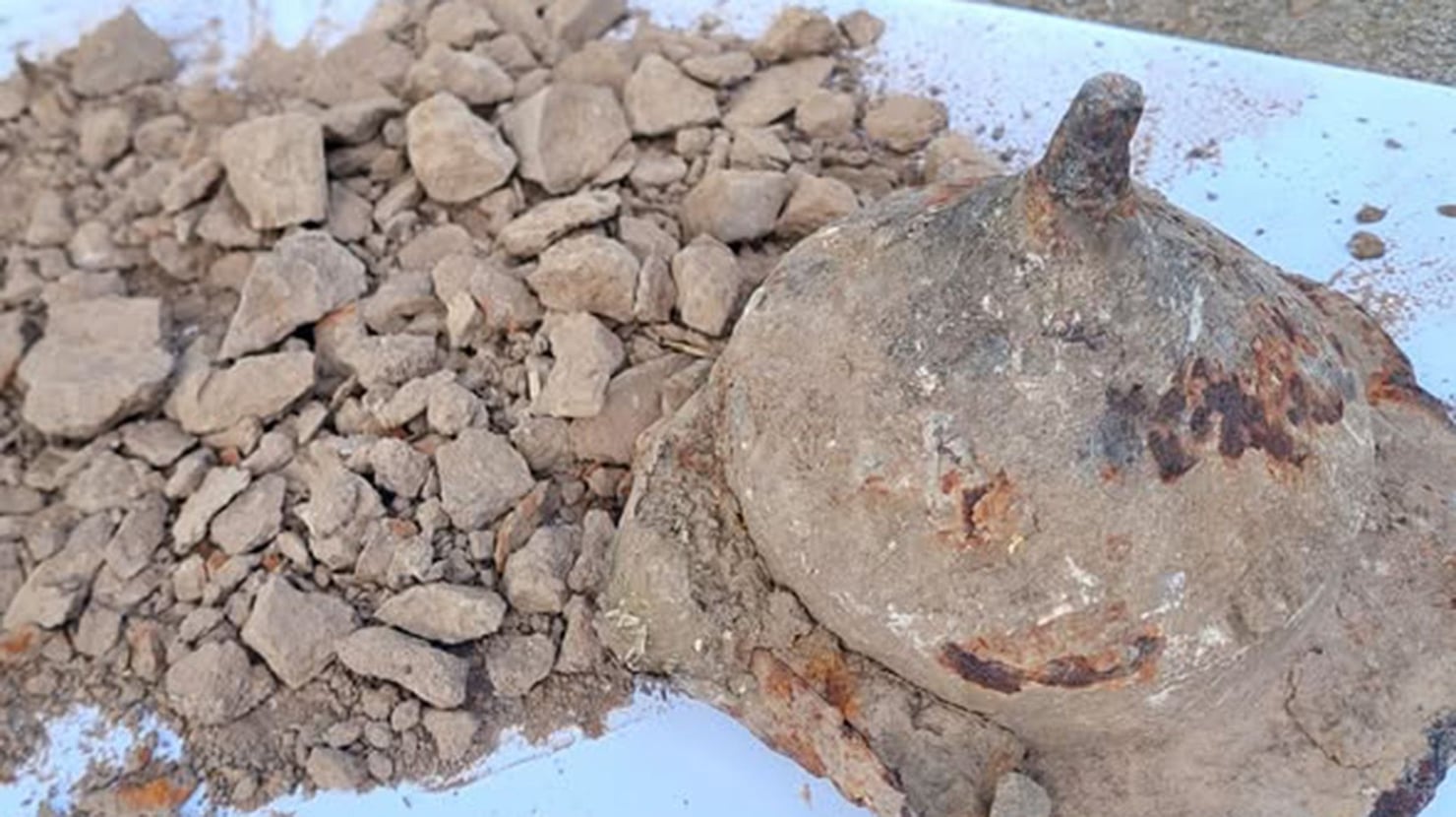
A man scanning a junk-filled field near Wrocław, Poland, expected to find scrap metal. Instead his detector led him to an iron shield boss, the dome-shaped centre piece that once protected a warrior's hand, and inside it, wedged into the hollow, were the burned bones of the man who had carried it roughly 1,800 years ago.
Archaeologists from the University of Wrocław, who examined the find after it was reported, say the boss belonged to a warrior of the Przeworsk culture, an Iron Age population in what is now Poland widely linked to the Vandals, the Germanic people who would later sack Rome in 455. The bones inside are cremated human remains, meaning the shield itself became the urn: after the warrior was burned on a pyre, someone gathered his ashes and packed them into the very object that had shielded him in life, before burying the whole assembly in the ground.
The practice sounds startling to modern ears, but archaeologists say it fits patterns already known from Przeworsk cemeteries, where weapons were sometimes deliberately bent, broken, or repurposed before burial, a ritual of decommissioning as much as of remembrance. What makes this discovery notable is not the custom itself but its condition and context: a metal shield boss surviving nearly two millennia in a field now used as an informal dump, found not by an excavation team with a grid and a permit, but by a hobbyist chasing a signal in the mud.
That collision, ancient ritual surfacing beneath modern rubbish, is what gives the find its charge. Somewhere under Poland's more inconspicuous ground, a soldier's armour became his grave, and it took a stranger with a metal detector and a junkyard's worth of patience to bring him back into the light, as reported by Live Science.
The artefact has been handed to regional heritage authorities for further study, and researchers hope more of the burial, and perhaps others nearby, may still be recoverable.


