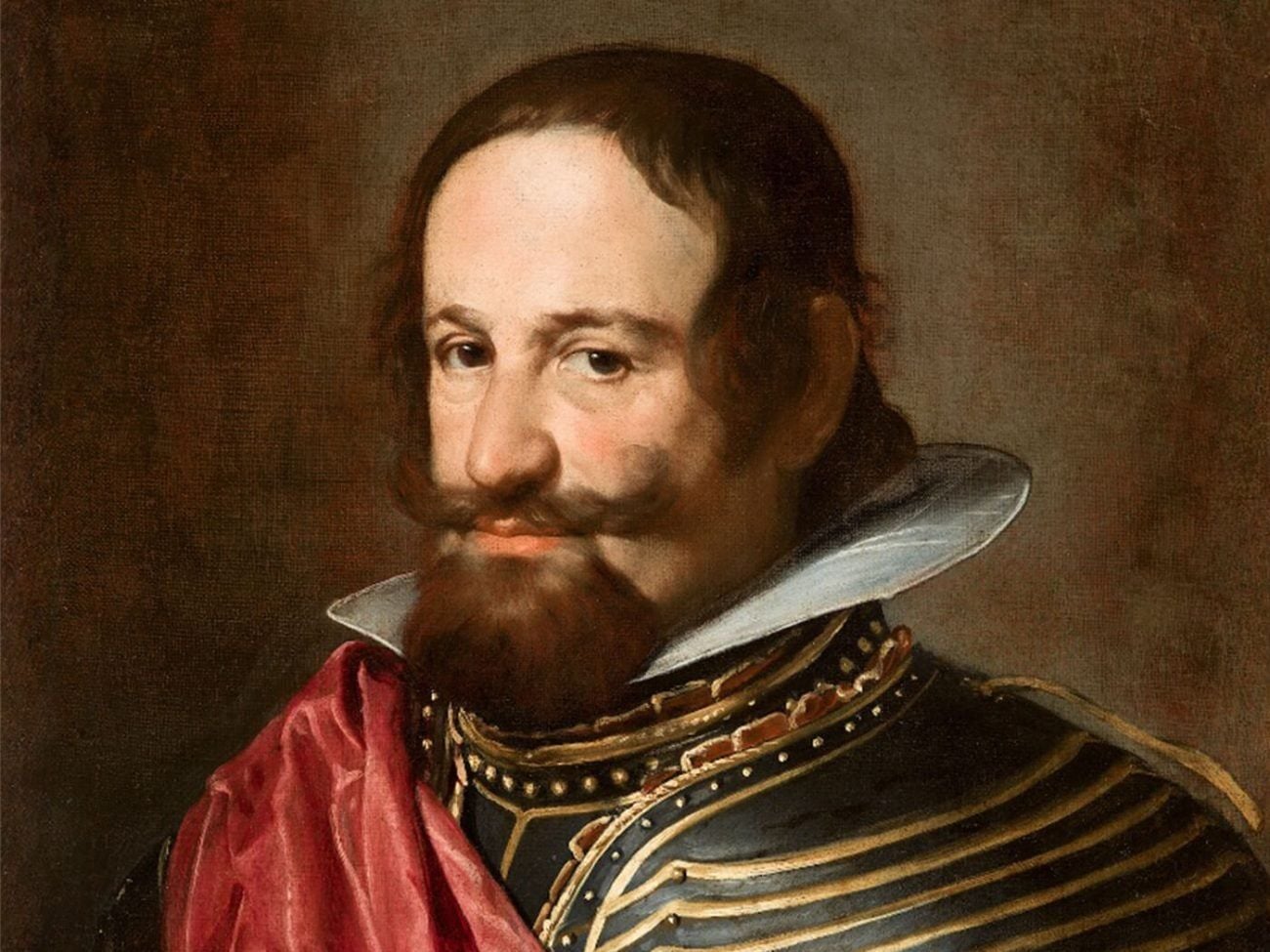
Under the varnish of a canvas being restored in Madrid, an X-ray showed something that shouldn't have been there: a man dressed in black, painted first, then covered over with gleaming armour, gold trim and a red sash across the shoulder. That hidden figure, and the pigments around it, told Salvador Salort-Pons he was looking at a Velázquez that had been missing since the seventeenth century.
Salort-Pons, director of the Detroit Institute of Arts and a recognised Velázquez specialist, has now published the attribution in issue 71 of the Spanish journal ARS Magazine, on 2 July 2025. The picture is a 1626 portrait of Gaspar de Guzmán y Pimentel, count-duke of Olivares, the favourite of Philip IV and Velázquez's most important patron when the painter arrived at the Madrid court, where he had to establish himself against a wall of hostile rivals.
The paper trail snaps in half. Olivares commissioned the portrait as a gift to Cardinal Francesco Barberini in Rome; it turns up in a seventeenth-century Roman inventory; then, for several centuries, nothing. It resurfaces only when a private owner brings it in for restoration in Madrid, catalogued as workshop, not master.
X-rays, infrared and ultraviolet imaging did the rest. The pigments matched those Velázquez used in the 1620s. The weave of the canvas matched several autograph works. And the pentimenti, the hesitations left in the paint, were unmistakably his: the same second thought, from black clothes to military dress, that scholars have already traced under a Philip IV portrait at the Prado.
If it holds, the picture joins a corpus of roughly 120 accepted Velázquez works. 'A first-rate discovery,' the art historian Giles Knox wrote in ARS Magazine, stressing how much these early portraits reveal about a young outsider fighting for his place at court.
The public will meet the painting on 24 January 2027, when the Detroit Institute of Arts opens 'Velázquez and Olivares: Early Years at Court', running until 25 July 2027. Between the Roman inventory and that opening night lies four centuries of silence that no one, yet, can explain.


