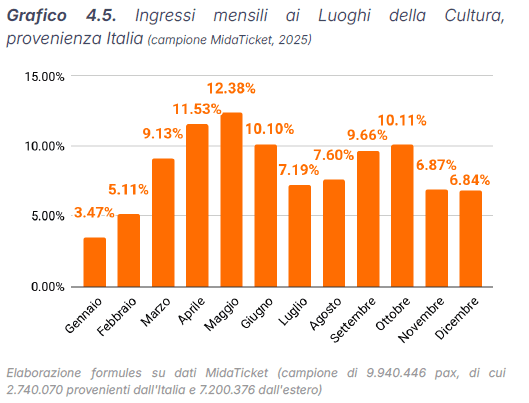
In 2025, May accounted for 11.4% of annual admissions across the 226 cultural sites analysed by Fondazione Delphos. April followed with 11.1%, with another busy period in September and October. January and February recorded the lowest shares, at 5.4% and 5.9% respectively.
The report, Il calendario della cultura. Stagionalità e cicli della domanda culturale (The Cultural Calendar: Seasonality and Cycles in Cultural Demand), examines 25.6 million admissions recorded through the MidaTicket ticketing system at public and private venues. Its findings describe patterns within this sample over the course of the year.
August accounted for 7.7% of admissions, despite being the busiest month for tourist arrivals in the comparison presented by the study. Tourist arrivals and admissions to cultural venues measure different things: comparing them does not reveal the choices made by individual travellers. According to exibart’s account of the report, the difference may partly reflect the summer appeal of seaside destinations and outdoor activities.
Patterns also vary within the sample. Larger venues have more consistent visitor flows, while smaller ones experience greater fluctuations. Location introduces further differences: at sites in seaside destinations, 42.2% of visits take place in summer, whereas those in major art cities are more evenly distributed across the seasons.
These differences underpin the proposals put forward by Sergio Bellini, president of Fondazione Delphos: adjusting admission prices, exhibition schedules and audience initiatives during quieter periods. The foundation’s scientific director, Guido Guerzoni, identifies a further goal: developing tools to forecast admissions at individual venues 30, 60 and 90 days ahead, helping them plan their activities.
- Fondazione Delphos ETS
- Fondazione Delphos, pagina ufficiale “Risultati delle ricerche”
- Pordenone Fiere, programma ufficiale dell’evento
- Pontificia Università Gregoriana, pagina sul convegno dell’Osservatorio
- exibart.com
- Fondazione Delphos, *Il calendario della cultura. Stagionalità e cicli della domanda culturale*