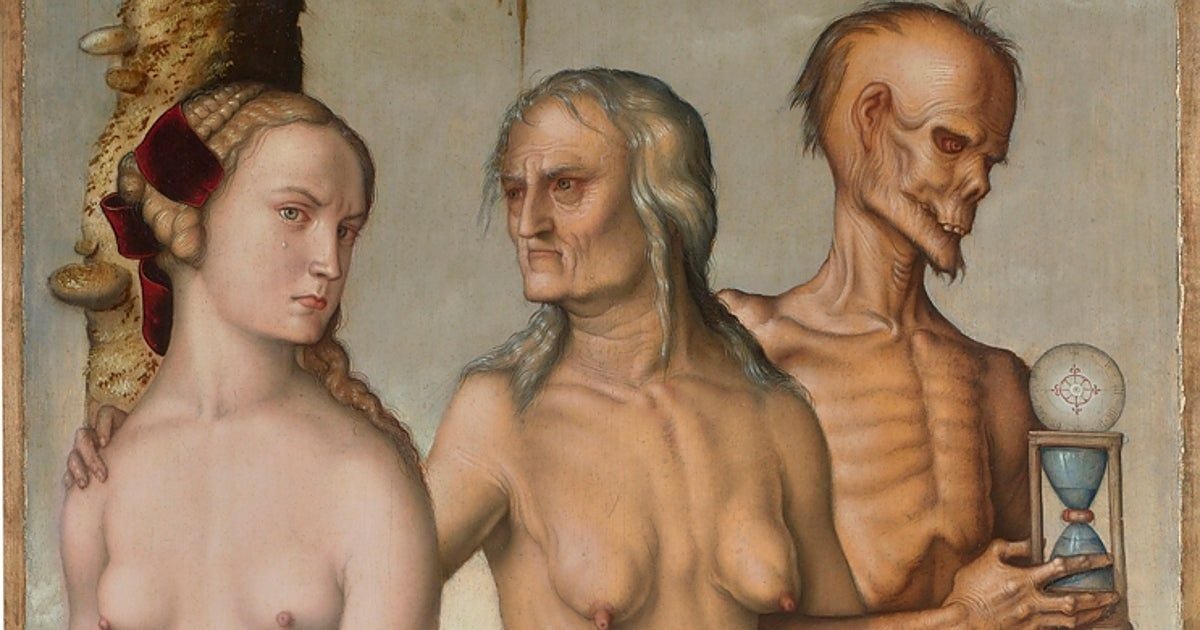
In Harmony (The Three Graces?), dark shadows created using black pigment accentuate the pale, pearlescent skin of the three young women. In The Ages and Death, by contrast, the reddish and brown tones of the women's skin grow progressively darker with age. This chromatic difference, brought to light by the restoration, is one of the central themes of the exhibition dedicated to Hans Baldung Grien at the Museo del Prado, which runs until 7 March 2027.
Dating from around 1541–1544, the two panels belong to the final stage of the German painter’s career and are the only paintings by Baldung in the museum’s collection. Restored in 2021 by María Antonia López de Asiaín, they underwent technical examination, including infrared reflectography. The research identified preparatory drawings executed freehand in dry charcoal, while cleaning made numerous botanical details visible again.
According to the exhibition’s curator, Christine Seidel, the two paintings were conceived as a pair. This interpretation is supported by both their identical dimensions and the thematic continuity of their compositions. As Seidel noted, the inventory drawn up after the death of Philip II, whose collection included the paintings, records that the panels were already joined by hinges to form a diptych in the sixteenth century.
The summer landscape and idealised figures of Harmony stand in contrast to the desolate setting of The Ages and Death. Here, an elderly woman holds on to a young woman, while the personification of Death, identifiable by its hourglass, grasps the older woman’s arm.
In Seidel’s interpretation, Baldung lends a psychological dimension to the medieval theme of the dance of death: forced to follow the elderly woman and Death, the young woman looks directly at the viewer, her eyes filled with tears.