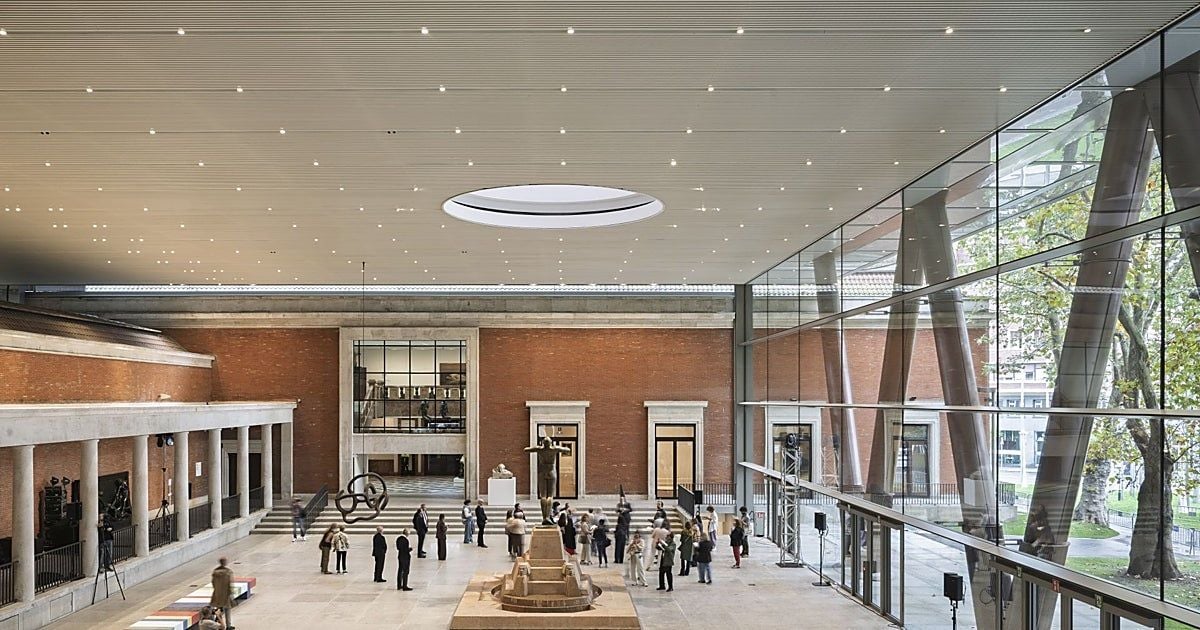
Francisco Durrio’s fountain, dedicated to the Bilbao-born composer Juan Crisóstomo de Arriaga, has been restored and reinstalled in the new atrium of Bilbao’s Museum of Fine Arts. It stands alongside sculptures including Eduardo Chillida’s Lugar de encuentros IV and Richard Serra’s Bilbao.
The museum reopened to the public on 6 October 2026, following an official inauguration the previous day. Designed by Norman Foster and Luis María Uriarte, the extension, called Agravitas, adds exhibition space and reorganises the connections between the museum’s buildings.
The new structure spans the 1945 building and its 1970 addition like a bridge. Beneath it, Arriaga Square becomes a covered atrium from which visitors can reach different parts of the museum. The project also brings the original 1945 entrance back into use as part of the visitor route.
The relationship between the extension and the existing buildings has been contested. In 2021, the Commission for Monuments and Historical Heritage of the Real Academia de Bellas Artes de San Fernando published a critical report examining the potential harm the project could cause to the protected complex.
The project also changes how people move inside the museum. Bringing the ground-floor levels into alignment is intended to make movement and orientation easier, while the new layout connects the galleries with the entrances and the older parts of the building.
The atrium is designed to be freely accessible. A large glass wall allows people to see the sculptures from outside, making the space part of the museum’s relationship with the city even before they enter the galleries.