During the final phase of the last Ice Age, sea levels and the extent of glaciers were very different from today. The Lost Land Bridge Project began from this landscape, asking whether Ireland may then have been easier to reach from Wales. On the Welsh side, markings in Bacon Hole cave have been dated to at least 17,100 years ago. The team set out to look for traces that might show what was happening in Ireland during the same period.
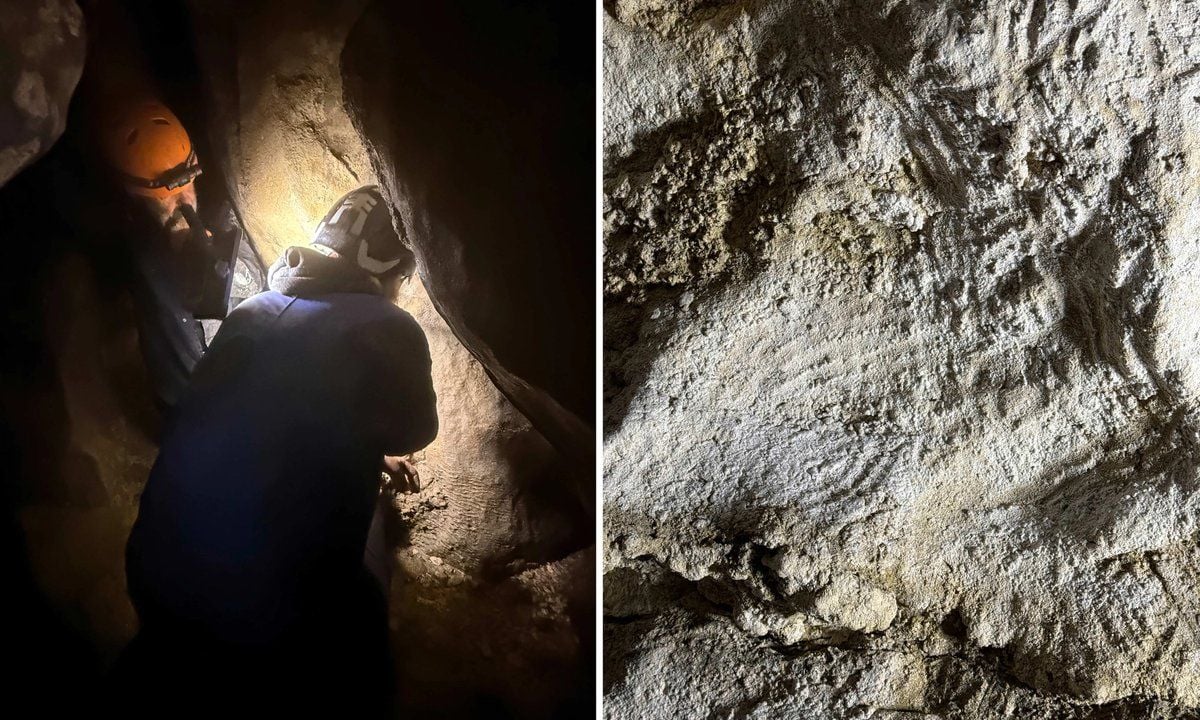
To decide where to investigate, palaeoanthropologist Genevieve von Petzinger developed LIACARA, a system that combines archaeological research, maps and landscape data. It identified 28 caves in south-west Ireland. The team surveyed them and found markings on the walls of eight sites.
Among the traces are finger-made grooves created when the cave surface was still soft, together with traces of pigment. According to the researchers, some shapes may represent animals. The findings can tell us something about human presence on the island only if it is possible to establish when the markings were made.
One point of comparison is a bear kneecap found in County Clare, whose cut marks have been dated to around 12,500 years ago. A very early date has also been proposed for the cave markings, but only further analysis can establish whether they actually predate the evidence of human activity currently recognised in Ireland.
The team will analyse pigments and mineral deposits on the cave walls to investigate the age and origin of the markings. If some prove to be earlier than the evidence currently known, they could alter the chronology of Ireland’s earliest human presence. First, however, researchers need to establish when the traces were made and what they represent.


