The bust known as Otho cannot be identified with certainty as a portrait of the emperor, and it is not made from a single kind of marble. Its head and base are white marble, while its torso is carved from a pink stone. The name preserves a traditional attribution, not a confirmed identity.
The portrait is among the works presented in a new space at the Antiquarium of Villa Albani Torlonia in Rome. Its opening adds 20 sculptures to the permanent display, 15 of them recently restored. The Antiquarium now holds 44 works, including sculptures and columns from the Torlonia Museum.
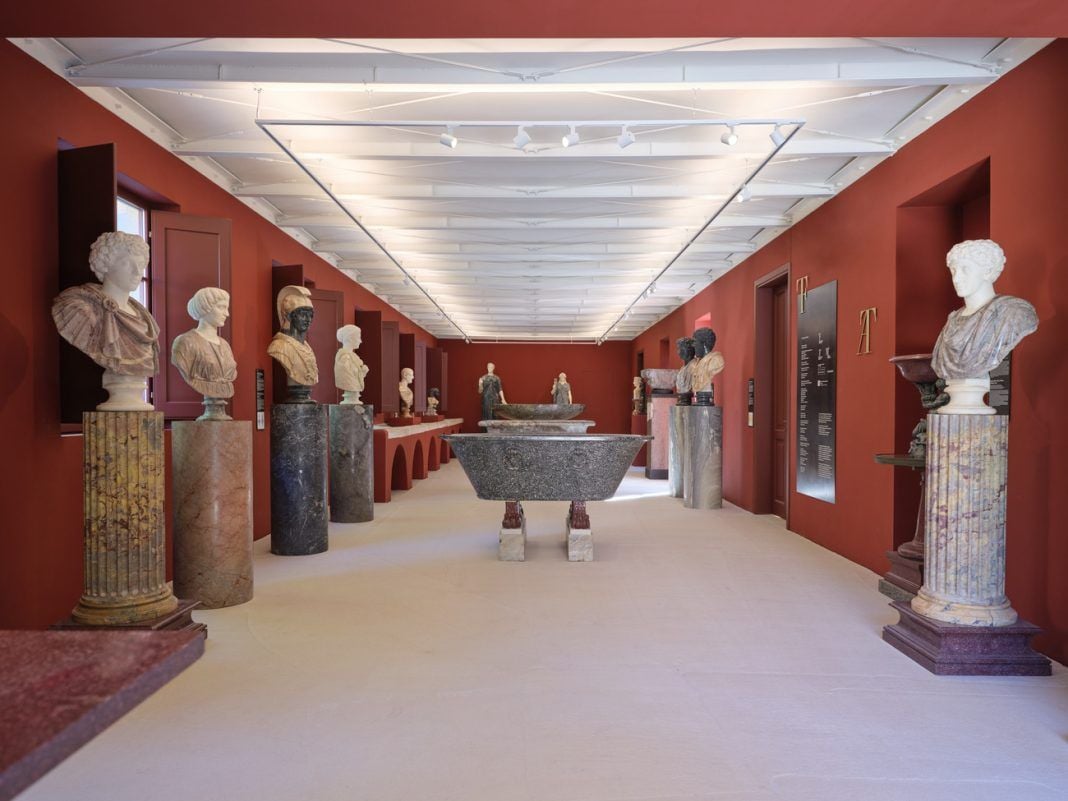
Curated by Carlo Gasparri, Marmora Romana draws attention to the collection’s materials. It takes its title from a study published in 1971 by Raniero Gnoli, to whom the project is dedicated. Egyptian red porphyry and black marble, green breccia, white marbles and pink stones invite visitors to look not only at the figures depicted, but also at the different parts from which some works are made.
One modern sculpted head of a woman, for example, rests on a draped bust of oriental alabaster. Its hairstyle recalls those seen in portraits of Plautilla and Crispina, but does not establish the woman’s identity. The head and the alabaster bust belong to different periods and form a composite work.
The room also contains two tables made from Egyptian red porphyry, once part of the furnishings of Palazzo Torlonia in Piazza Venezia. They extend the display beyond sculpture and show another use for the stones found in the collection.
The display presents the sculptures alongside the additions and restorations made during their preservation. Differences between the stones help make some of those changes visible.


